The best wigs are usually the ones you never notice. No double takes, no obvious edges, just hair that sways, parts, and catches the light exactly as it should.
While buying a human hair wig gets you halfway there, materials alone aren’t enough. A believable look comes down to how well the cap fits, how the hair is knotted, the subtle tones in the dye work, and how naturally it frames your face. If you’re exploring human hair wigs for the first time, knowing what to look for makes the process straightforward instead of overwhelming. Realistic wigs aren’t just pulled off a shelf; they are built from small design choices that deliver both authentic appearance and all day comfort.
Why Fit and Appearance Matter Daily
A wig is rarely just an accessory; it’s how you present yourself to the world. A convincing piece gives you peace of mind whether you’re heading into a meeting, catching up with friends, or grabbing groceries on a rainy afternoon.
Comfort is just as vital. A cap that fits well, breathes in warm weather, and stays put lets you get on with your day without adjusting it constantly. When you feel secure in how it looks and feels, choosing a fringe, a new length, or a fresh shade feels like an extension of your own style.
Ultimately, a good wig shouldn’t feel like a cover up. It should simply feel like your own hair.
Key Elements of a Natural Looking Wig
Realistic wigs rely on a combination of several design decisions working seamlessly together. On their own, none of these elements is dramatic, but combined, they create an effortlessly natural finish.
Realistic Hairline
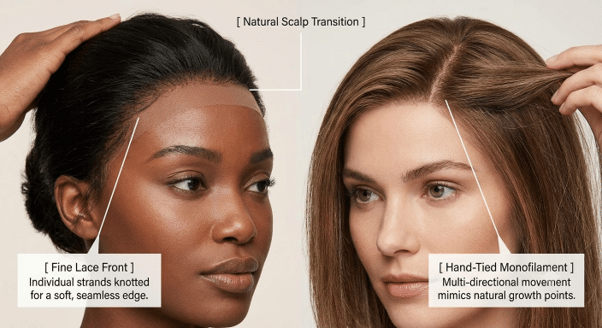
The hairline is where the eye naturally goes first. A well designed hairline uses fine, varied hair placement along the front edge to mimic the way hair actually grows from the scalp, rather than presenting a hard, uniform edge.
Hand Tied Construction
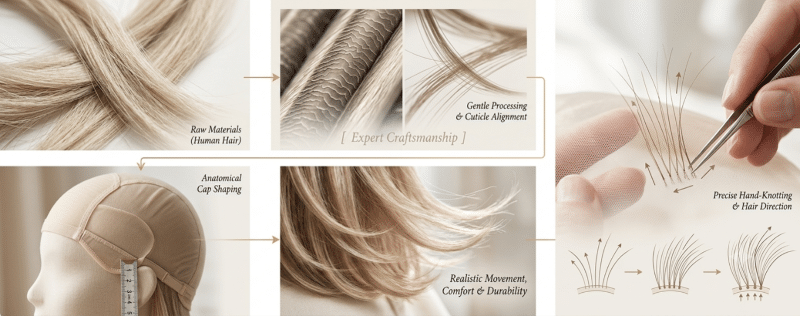
Rather than machine wefted rows sewn in straight lines, a hand tied wig features individual strands (or small groups of strands) knotted directly into a soft mesh base. This allows each strand to move freely, giving hand tied wigs their realistic movement and natural parting.
Natural Movement:
Real human hair behaves differently to synthetic fibres, it responds to wind, humidity, and touch naturally. Paired with hand tied construction, this movement becomes even more convincing since the hair isn’t restricted by rigid wefts.
Realistic Density:
Natural hair is rarely uniformly thick from root to tip. Skilled wig makers taper the density, thinning it slightly at the temples and part line, to avoid a tell tale “too full” look.
Colour Dimension:
Natural hair is rarely a single flat shade. Subtle variation through lowlights, highlights, and tonal blending recreates how natural hair reflects light, adding depth and richness. This colour guide gives you more information on this area. (human hair experts)
Texture:
Whether straight, wavy, or curly, the texture needs to suit your face shape and the overall density of the wig. Texture also plays a key role in believable daily movement.
Shine:
Human hair naturally reflects light, but excessive shine can look artificial. The right finish sits between matte and glossy, mirroring the healthy sheen of natural hair.
Cap construction.
Beneath all of this sits the cap, the foundation the hair is tied into. A well-designed cap follows the natural curve of the head, allowing the hairline and part to sit convincingly close to the scalp.
| Feature | Why It Contributes to a Natural Look | Key Benefit |
| Human Hair | Provides natural movement, softness, and realistic light reflection. | Can be washed and heat styled like your own hair. |
| Hand Tied Cap | Allows individual strands to move freely in any direction. | Eliminates stiff, uniform rows and improves breathability. |
| Lace Front | Creates a soft, gradual hairline along the forehead. | Allows you to wear hair swept back off your face. |
| Colour Dimension | Uses highlights, lowlights, and root shading to add depth. | Avoids a flat, artificial, single tone appearance. |
| Tapered Density | Thinner at temples and parting line. | Keeps the wig from looking overly full or bulky. |
| Professional Fitting | Adjusts cap size and ear tabs to contour smoothly to the head shape. | Prevents slipping, bulkiness, and discomfort during wear. |
Construction Details That Matter
It’s easy to assume real hair automatically equals a great wig, but the construction technique does much of the heavy lifting. Hand knotting takes hours of precise work, ensuring each strand sits at an angle that mirrors natural hair growth, swirling gently at the crown and slanting softer near the ears.
Where you live matters too. For example, in New Zealand’s variable climate, where humid coastal breeze can turn into sudden afternoon sun, a lightweight, breathable cap with secure grips ensures your piece stays comfortable and stable anywhere you go.
Common Mistakes Wig Buyers Make
One of the most common mistakes is choosing too much density. It’s a natural instinct to want full, thick hair, but overly dense wigs are actually one of the easiest things for people to spot. Real hair almost always shows a little scalp visibility at the part and temples, so a wig that’s packed edge to edge can end up looking less convincing, not more.
Cap size is another detail that’s easy to underestimate. A cap that’s too big will bunch up at the nape or shift around during the day, while one that’s too small can ride up and leave you with a sore head by the afternoon. Taking accurate head measurements before you buy makes a bigger difference to comfort and appearance than most people expect.
Colour can trip people up too. A single, flat shade, jet black straight through, or an all over blonde with no variation, often reads as synthetic, even when the hair itself is genuinely human hair. Lowlights, highlights or subtle root shading go a long way toward making the colour look like it grew that way.
And finally, it’s worth remembering that even a high end wig usually isn’t quite finished the moment it comes out of the box. Most need a bit of professional customisation, trimming the lace, tailoring the fringe, thinning out any bulk, to properly suit your face shape. Skipping this step is one of the easiest ways to end up with a wig that looks good in theory but not quite right on you.
Custom vs. Ready-to-Wear Wigs
Deciding between custom and ready-to-wear comes down to your timeframe and budget:
Custom Wigs:
Built from scratch to your exact head measurements, hairline shape, and colour preferences. They offer a glove like fit and bespoke finish, though they take longer to make and carry a higher price tag.
Ready-to-Wear Wigs:
Made to standard cap sizes and available immediately. High quality ready-to-wear pieces use hand tied bases and human hair, needing only light adjustments by a stylist to feel fully personalised.
Your Quick Buying Checklist- questions to ask before purchasing
Before committing to a wig, tick off these essentials:
Hair Type: Is it 100% human hair (cuticles running in the same direction to prevent tangling)?
Front Edge: Does it have a fine lace front for an undetectable hairline?
Parting Area: Is there a monofilament top or silk top that looks like real scalp where you part it?
Cap Fit: Did you measure your head circumference, ear-to-ear, and front-to-back distances?
Colour Depth: Does the shade include multi-tonal highlights or root shading?
Lifestyle Compatibility: Is the cap breathable enough for your daily activity level and climate?
Choosing a Human Hair Wig That Suits Your Lifestyle
Once you understand the fundamentals of a natural look, the next step is practical: deciding which type of wig suits your day-to-day life.
Custom wigs are made to an individual’s specific head measurements, hairline preferences and colour requirements. This tends to offer the closest possible fit and the most tailored natural appearance, though it usually takes longer to create and often costs more.
Ready-to-wear wigs, on the other hand, are made to standard sizing and are available more quickly. Many are still hand tied and crafted from human hair, offering a very natural look, though they may need some tweaking, such as trimming the hairline, to feel fully personalised.
Neither option is inherently superior, it simply depends on your priorities. If you need an exact colour match or specific hairline shape, a custom piece may be ideal. If you prefer a natural looking option sooner, ready-to-wear is a practical path. A professional fitting helps clarify the best fit for your head shape and daily routine.
Looking After Your Human Hair Wig
Because wig hair doesn’t receive natural oils from the scalp, gentle maintenance keeps it soft and healthy.
- Washing: Clean every 10 to 14 wears using a sulphate free, hydrating shampoo. Avoid harsh rubbing; gently stroke the suds through the hair.
- Conditioning: Apply a rich conditioner from mid lengths to ends, keeping product away from the cap knots to prevent them from loosening.
- Detangling: Work from the ends up using a wide tooth comb or wig brush.
- Storage: Keep your wig on a stand or mannequin head when not in use to preserve the cap shape and prevent tangling.
- Heat Styling: Use flat irons or curling tongs on low to medium heat settings, and always apply a heat protectant spray first.
- Regular Maintenance: Occasional professional servicing, such as retightening the cap or refreshing the style, can extend the life of your wig significantly.
In humid parts of New Zealand, a drop of lightweight hair oil or anti-frizz serum helps keep the hair smooth outdoors.
Choosing With Confidence in New Zealand
Everyday lifestyle factors across New Zealand, from humid coastal summers to drier, cooler winters, influence how hair behaves and how often it needs care. New Zealanders generally favour low maintenance, versatile styling that transitions effortlessly from work to weekend. Choosing a local provider who understands these preferences alongside construction details makes selecting custom or ready-to-wear options straightforward and stress free.