
We’ve all been there – lying in bed, mind racing, body tense from the day’s activities, struggling to drift off to sleep. If you’re looking for a simple way to improve your sleep quality without reaching for supplements (which can help) or gadgets, gentle stretching before bed might be just what you need.
Research suggests that incorporating a few minutes of gentle stretching into your evening routine can help you fall asleep faster and enjoy better quality rest. Let’s explore why this simple practice is gaining popularity across Australia and New Zealand, and how you can easily add it to your nightly wind-down.
Why Stretching Before Bed Actually Works
The connection between stretching and better sleep isn’t just in your head – there’s genuine science behind it. When you stretch gently in the evening, you’re essentially telling your body it’s time to shift gears from the day’s hustle and bustle.
Stretching activates what’s called your parasympathetic nervous system – think of it as your body’s “rest and digest” mode. This is the opposite of your “fight or flight” response that keeps you alert and stressed during busy days. When this relaxation system kicks in, your heart rate slows down, your breathing deepens, and your muscles begin to release tension.
Many of us carry physical stress from our daily activities without even realising it. Whether you’ve been hunched over a computer, standing on your feet all day, or dealing with the physical demands of parenting, your muscles accumulate tension. This tightness can make it difficult to get comfortable in bed and may even cause you to wake up during the night with cramps or stiffness.
The Sleep Benefits You Can Expect
Regular bedtime stretching can offer several improvements to your sleep experience:
- Faster sleep onset – Many people find they drift off more quickly after a gentle stretching routine
- Reduced night-time muscle cramps – Particularly helpful for those who experience leg cramps or restless legs
- Less morning stiffness – Wake up feeling more limber and comfortable
- Better sleep quality – Deeper, more restorative sleep throughout the night
- Reduced stress and anxiety – The mindful nature of stretching helps quiet a busy mind
The beauty of bedtime stretching is that it addresses both physical and mental barriers to good sleep. While your muscles are releasing tension, your mind naturally begins to slow down as you focus on your breathing and body awareness.

Simple Stretches to Try Tonight
You don’t need to be flexible or have any special equipment to start stretching before bed. These gentle movements can be done in your bedroom and take just 10-15 minutes total.
Upper Body Relief
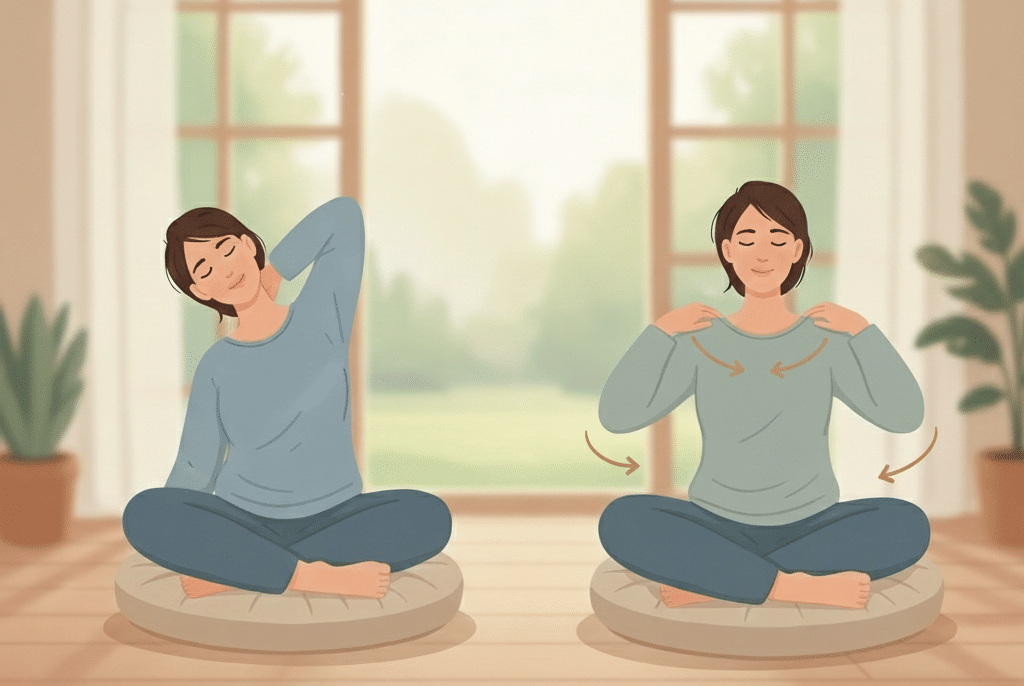
Neck and Shoulder Release: Sit comfortably and slowly bring your right ear toward your right shoulder. Hold for 20-30 seconds, then switch sides. Follow this by gently rolling your shoulders backwards five times. This is particularly beneficial if you’ve spent time looking at screens or working at a desk.
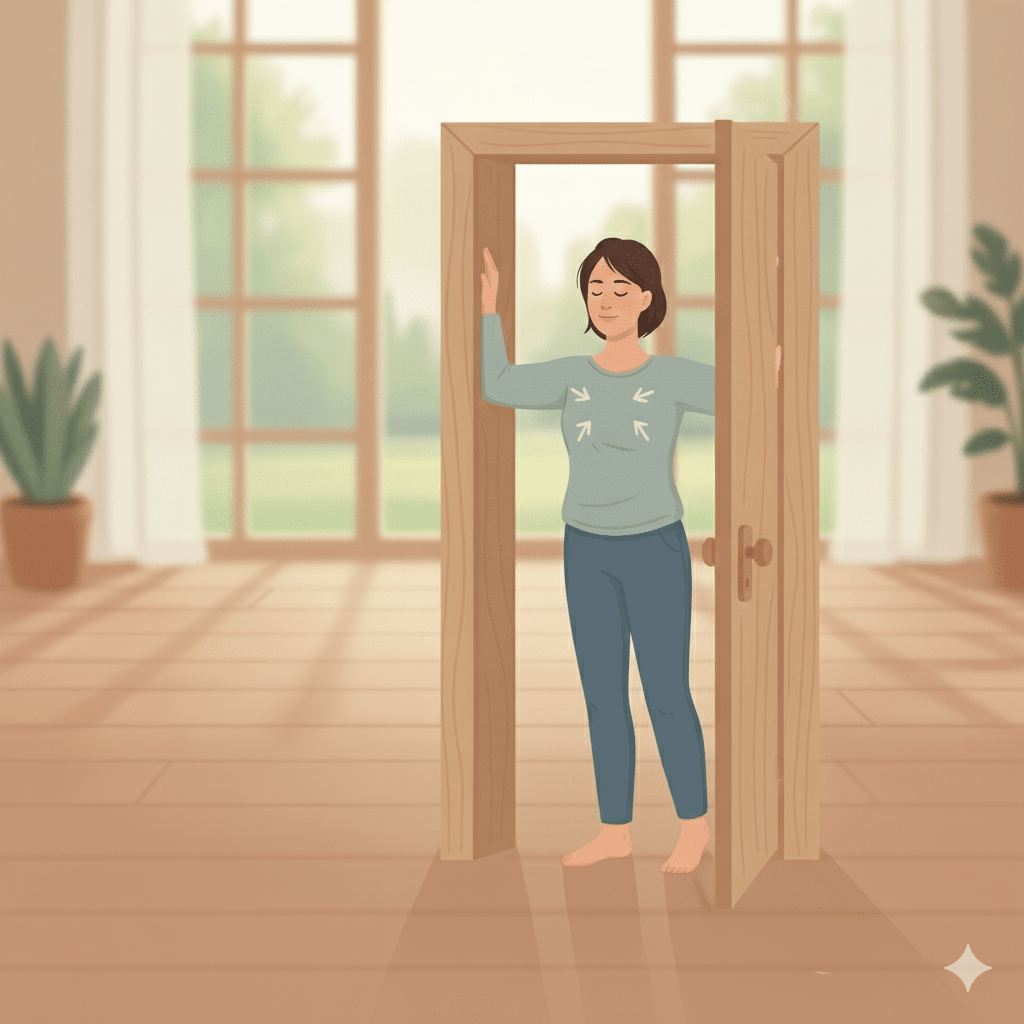
Doorway Chest Stretch: Stand in a doorway with your forearms flat against the frame. Step forward gently until you feel a stretch across your chest and shoulders. Hold for 30 seconds. This counteracts the forward posture many of us develop throughout the day.
Spine and Core
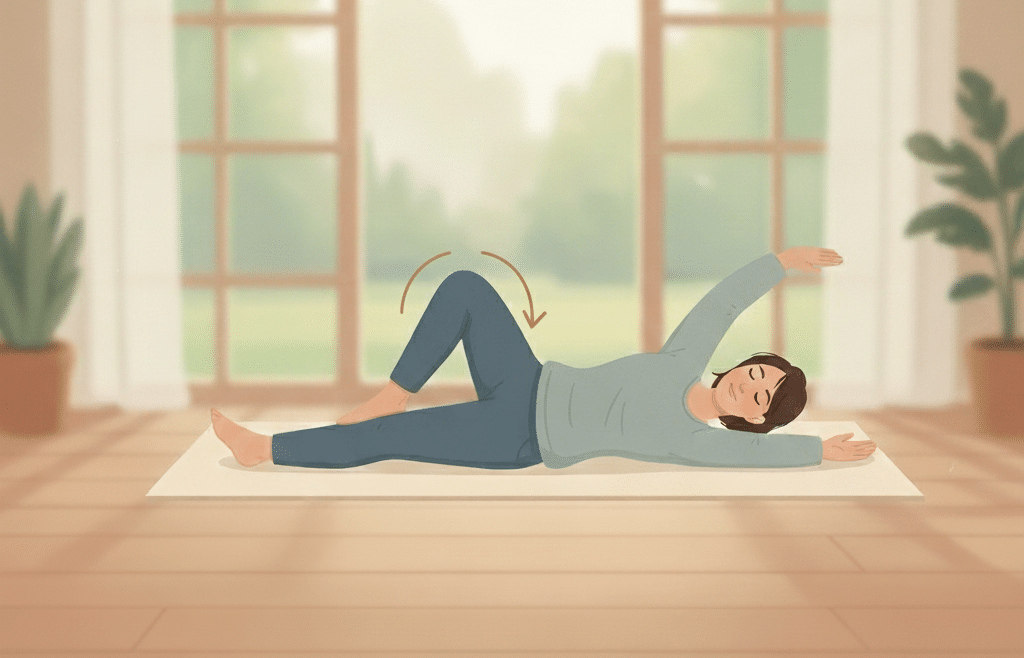
Spinal Twist: Fantastic for releasing tension in your back and improving circulation. Lie on your side with your knees bent at 90 degrees. Keep your lower body still while gently rotating your upper body and reaching your top arm across to the other side. Hold for 15-30 seconds, then switch sides.
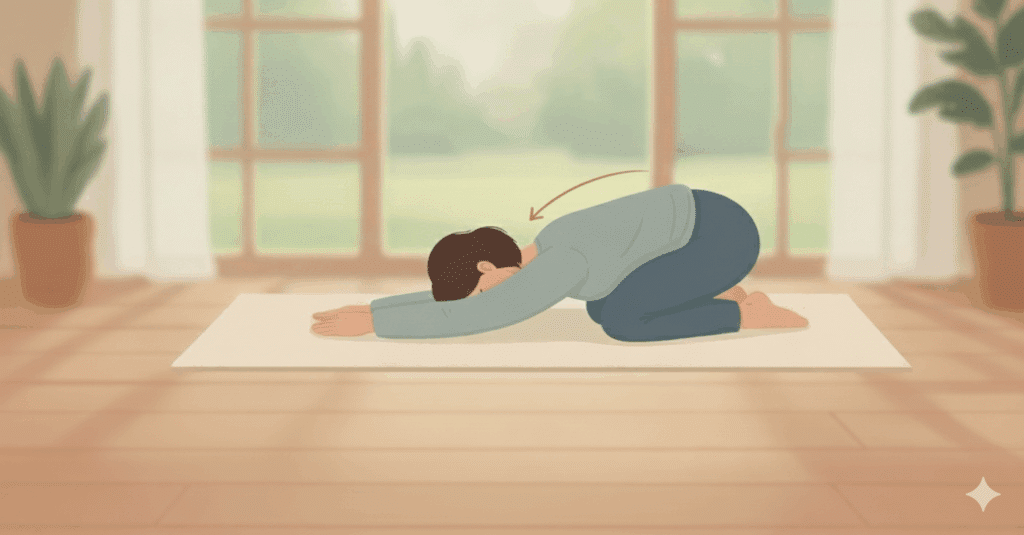
Child’s Pose: kneel on the floor, sit back on your heels, then fold forward with your arms extended in front of you. This stretch helps decompress your spine while promoting a sense of calm and introspection.
Lower Body Stretches
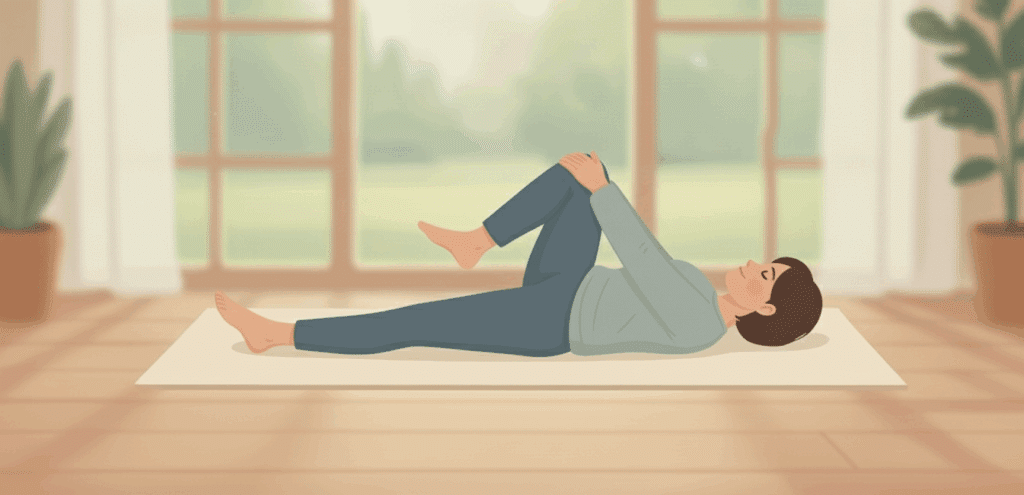
Knee to Chest Press: Lie on your back and pulling one knee gently toward your chest. Hold for 30 seconds, then switch legs. This simple movement helps release tension in your hips and lower back.
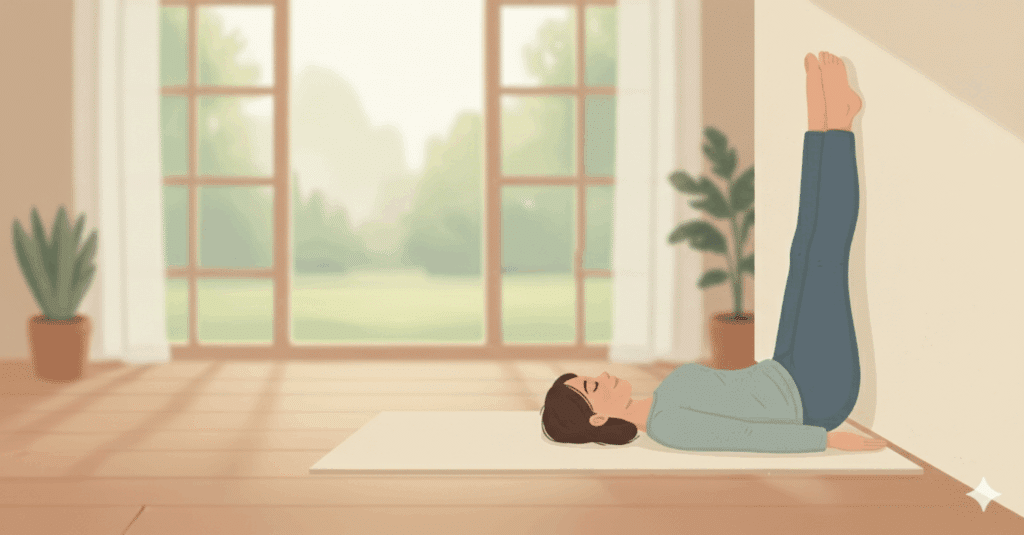
Legs On the Wall: Lie near a wall and extend your legs straight up against it. This gentle inversion helps improve circulation and can be incredibly relaxing – many people find it almost meditative.
Creating Your Personal Routine
The key to success with bedtime stretching is consistency rather than complexity. Start with just three or four stretches that feel good for your body, and aim to do them around the same time each evening.
Timing matters: Plan to stretch about 30 minutes to an hour before you actually want to be asleep. This gives your body time to fully relax after the stretching session. If you wait until you’re already exhausted, you’re likely to skip the routine altogether.
Set the scene: Dim the lights, put away screens, and create a calm environment. Some people enjoy gentle background music or aromatherapy, but this isn’t necessary – the stretching itself is the main event.
Listen to your body: Every person’s needs are different. Focus on areas where you typically hold tension. If you’re a desk worker, prioritise neck and shoulder stretches. If you’re on your feet all day, spend more time on leg and foot stretches.
Important Guidelines for Safe Stretching
While bedtime stretching is generally safe for most people, there are some important points to keep in mind:
- Never stretch to the point of pain – you should feel gentle tension, not discomfort
- Hold stretches steadily without bouncing or jerky movements
- Keep breathing normally throughout each stretch
- If you have existing injuries or health conditions, check with a healthcare professional first
- Avoid intense or dynamic stretching before bed, as this can be too stimulating
Remember, the goal isn’t to become more flexible (though that may happen over time) – it’s to help your body and mind prepare for sleep.
Making It Stick
Like any new habit, consistency is more important than perfection. Start small – even five minutes of gentle stretching is better than none. You might begin with just two or three stretches and gradually add more as the routine becomes natural.
Some people find it helpful to lay out a yoga mat or towel as a visual reminder, while others prefer to stretch directly on their bed. The most important thing is choosing an approach you’ll actually follow through with.
Don’t worry if you miss a night here and there. The benefits of bedtime stretching build over time, but you’re likely to notice some immediate improvements in how relaxed you feel as you settle into bed.
The Bottom Line
Stretching before bed is one of those simple practices that can make a real difference to your sleep quality without requiring any special equipment, skills, or significant time investment. By spending just a few minutes each evening helping your body transition from the activity of the day to the rest of the night, you’re setting yourself up for more restorative sleep.
Give it a try for a week or two and see how you feel. Many people find that this gentle practice not only improves their sleep but also becomes a cherished part of their evening routine – a few minutes of peace and self-care at the end of each day.
Sweet dreams!
Disclaimer: This article provides general wellness information only and is not professional medical advice. If you have health concerns or existing injuries, please consult with a healthcare professional before starting any new stretching routines.