Rapid hair loss can change a man’s appearance in a relatively short period, often making it difficult to adapt a hairstyle or grooming routine quickly enough. When thinning develops gradually, there is usually more time to experiment with shorter cuts, styling products or other cosmetic options.
Rapid hair loss is different because the contrast between the remaining hair and exposed areas can become noticeable within months, or even weeks in some cases.
A custom men’s hair system matching offers a practical way to restore a consistent appearance without relying on a generic, one-size-fits-all solution. The objective is not simply to cover areas of hair loss.
A well-matched system should reflect the wearer’s natural colour, texture, density, hairline and overall style. It should also be designed with future changes in mind, particularly when hair loss is still progressing.
Understanding Rapid Hair Loss in Men
Common Causes of Sudden or Accelerated Male Hair Loss
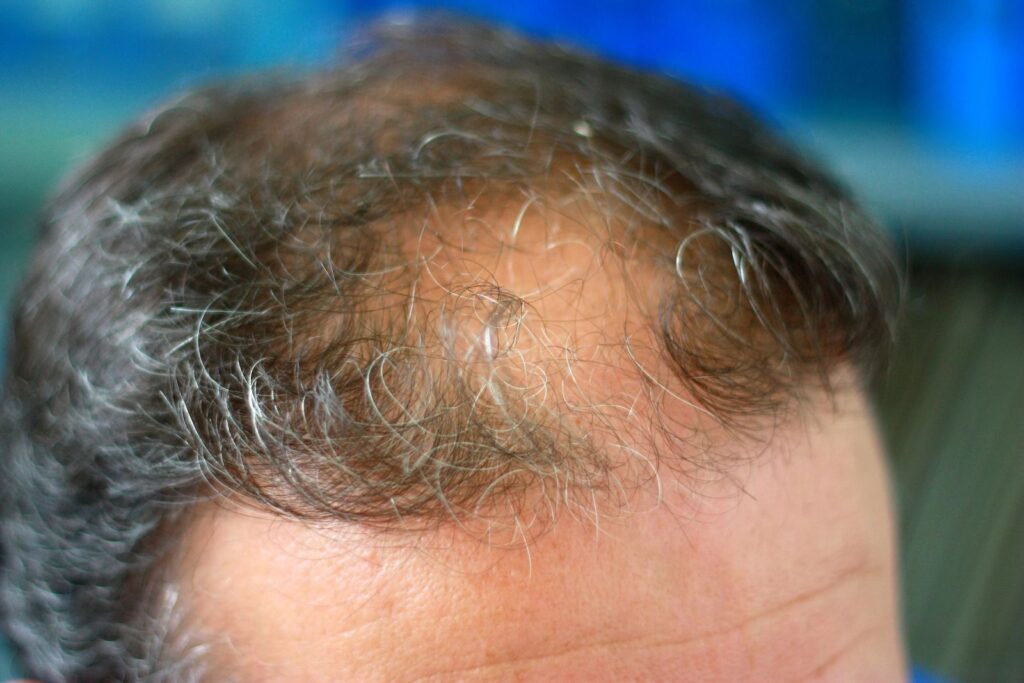
Male hair loss may progress at different rates depending on genetics, age, hormonal activity, stress, health conditions and lifestyle factors. Androgenetic alopecia, commonly known as male pattern hair loss, often develops slowly, but some men experience a much faster change in density across the hairline, crown or top of the scalp.
Other forms of shedding may appear more suddenly. Significant stress, illness, nutritional changes or certain medications can sometimes contribute to increased hair fall. Because the cause and progression can vary considerably, men experiencing unexpected or severe hair loss should seek appropriate professional advice before assuming that the change is purely cosmetic.
From a hair system perspective, the speed of hair loss matters because the system must work with the current pattern while remaining adaptable. A design that looks suitable today may need adjustment if the surrounding natural hair continues to thin.
How Rapid Hair Loss Can Affect Confidence and Appearance
Hair contributes to facial balance, perceived age and personal identity. When it disappears quickly, the change can feel more dramatic because there has been little time to adjust. Men may become more conscious of overhead lighting, photographs, social occasions or windy conditions that make thinning areas more visible.
A custom men’s hair system can help restore visual consistency. However, the result depends heavily on accurate matching. A system that is too dense, too dark or poorly blended may attract more attention than the original hair loss. The goal should be a believable appearance that suits the individual rather than an attempt to recreate an unrealistically thick head of hair.
Why Early Hair System Planning Can Improve the Final Result
Planning early allows the design to take account of the wearer’s existing hair while there is still enough natural growth to analyse. Colour samples, curl patterns, growth direction and density can all be assessed before further thinning alters the overall appearance.
Early planning also makes the transition easier. A gradual reduction in natural hair length, followed by the introduction of a carefully matched system, can appear less abrupt than a sudden change from advanced hair loss to a very full hairstyle. This is particularly useful for men who want a discreet result in professional or social settings.
What Is Custom Men’s Hair System Matching?
How Custom Hair Systems Differ From Standard Hairpieces
Standard hairpieces are manufactured in predetermined sizes, colours, densities and base designs. They can suit some wearers, especially when a quick or affordable option is required, but they may involve compromises in fit or appearance.
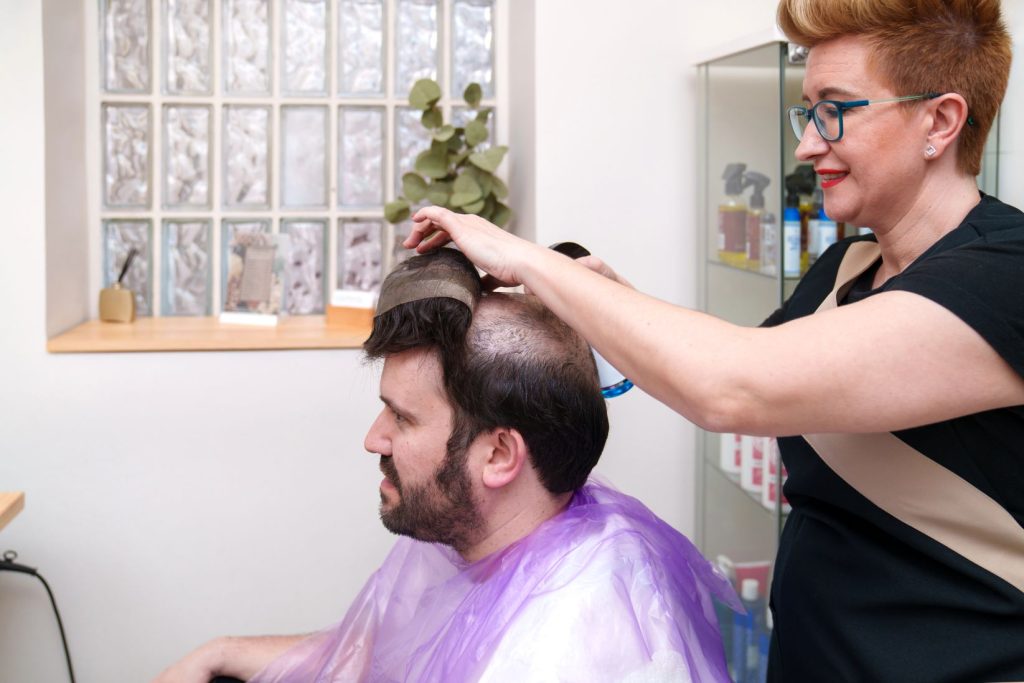
Custom hair systems are designed around individual measurements and aesthetic requirements. A template may be created to reflect the exact area of hair loss, while the hair colour, texture, direction and density are selected to blend with the remaining hair. The base can also be chosen according to scalp sensitivity, preferred attachment method and maintenance routine.
For men with rapid hair loss, customisation is especially valuable because the system can be shaped around an irregular or changing thinning pattern rather than covering a standardised area.
The Role of Hair Density, Colour and Texture Matching
Natural-looking hair system matching depends on several details working together. Colour is important, but colour alone is not enough. Density must suit the wearer’s age and existing side hair, while texture should match the natural straightness, wave or curl.
Even a close colour match can look unnatural when the replacement hair is much thicker than the surrounding growth. Similarly, straight replacement hair may not blend with naturally wavy sides. Effective matching therefore considers the complete visual relationship between the system and the wearer’s own hair.

Why Face Shape and Personal Style Matter in Hair System Selection
A custom men’s hair system should complement facial proportions and personal style. A low, straight hairline may look too severe on an older wearer, while a highly exposed hairline may not suit someone who prefers a relaxed, textured style.
Face shape can influence where volume should be placed and how the front should be styled. Men with longer faces may benefit from a softer fringe, while those with rounder faces may prefer more height and direction through the top. The final design should feel consistent with the wearer’s clothing, profession and usual grooming habits.
Why Men With Rapid Hair Loss Need a Personalised Approach
Adapting a Hair System to Changing Levels of Hair Loss
Rapid hair loss often continues after the first hair system has been fitted. For this reason, the initial design should not be treated as permanent. The base size, blending area and density may need to change as natural hair becomes finer.
A personalised approach allows adjustments to be made over time. The system may be enlarged, the side blend may be softened, or the attachment method may be changed if the scalp becomes more exposed. Regular reviews help maintain a consistent appearance as the pattern develops.
Creating a Natural Transition From Existing Hair to a Hair System
The transition between replacement hair and natural hair is one of the most important areas in custom hair system matching. The two sections must appear to share the same density, colour and growth direction.
Blending is usually easier when the natural hair around the sides and back has sufficient length. Very short cuts can still work, but they require more precise cutting and a well-designed base edge. The stylist may use graduation, texture and controlled thinning to prevent a visible line between the system and the surrounding hair.
Avoiding Excessive Density and Other Common Matching Mistakes
Many first-time wearers are tempted to choose a system that is significantly thicker than their natural hair. Although this may appear desirable in isolation, it can look unrealistic once fitted.
Excessive density is particularly noticeable when the sides remain fine or receded. Choosing a softer density often creates a more convincing result because some scalp visibility is normal, especially around the hairline. Other common mistakes include selecting a uniform colour, ignoring grey hair and creating a front edge that is too low or sharply defined.
Assessing Hair Loss Before Choosing a Custom Hair System
Identifying the Pattern and Extent of Hair Loss
Before a system is ordered, the area of thinning should be assessed carefully. Some men lose hair primarily at the crown, while others experience frontal recession or widespread thinning across the entire top.
The system should cover the necessary area without extending unnecessarily into healthy hair. A precise template helps ensure that the base follows the shape of the hair loss and sits flat against the scalp. For men whose hair loss is progressing rapidly, some allowance may be made for likely near-term changes.
Evaluating the Remaining Hair Around the Sides and Back
The natural hair around the sides and back provides the reference point for custom hair system matching. Its colour, thickness, wave and growth direction influence the replacement hair specification.
The condition of the remaining hair also affects the chosen style. If the sides are very fine, a high-density top may be difficult to blend. A shorter, textured style may produce a more balanced result. Where the side hair remains strong, there may be greater flexibility in length and volume.
Considering Scalp Condition, Sensitivity and Lifestyle Needs
The scalp should be assessed for sensitivity, oiliness, dryness or irritation. These factors can influence the most suitable base material and attachment method.
Lifestyle is equally important. A man who exercises frequently may require a breathable base and secure adhesive, while someone who prefers regular removal may favour a simpler attachment system. Matching should therefore account for how the system will be worn in daily life, not only how it looks during the initial fitting.
Matching Hair Colour for a Natural-Looking Result
Comparing Natural Hair Colour in Different Lighting
Hair colour can appear different under natural daylight, indoor lighting and direct sun. A colour that seems accurate in a salon may look too warm or too dark outside.
For reliable matching, the remaining hair should be assessed under several lighting conditions. Samples may also be taken from different areas because hair often varies between the temples, sides and back. This helps create a more natural blend than relying on a single flat shade.
Accounting for Grey Hair, Highlights and Colour Variation
Natural hair is rarely one uniform colour. It may contain lighter strands, darker roots, grey percentages or subtle sun exposure. Custom hair systems can incorporate a blend of shades to reproduce this variation.
Grey matching should be particularly precise because an incorrect percentage can make the system appear noticeably separate from the natural hair. A small amount of grey can soften the overall result and help the replacement hair suit the wearer’s age.
Planning for Future Colour Changes as Hair Loss Progresses
Hair colour may change over time due to ageing, environmental exposure or changes in the remaining natural hair. Replacement hair can also fade through washing and sunlight.
Ongoing maintenance may include colour correction or revised specifications for future systems. Men with rapid hair loss should expect the matching process to evolve rather than assuming that the same colour formula will remain ideal indefinitely.
Selecting the Right Hair Density and Texture
Matching Hair Density to Age and Existing Hair Growth
Density should be selected according to the wearer’s age, facial features and remaining natural hair. A mature hairline with moderate density often looks more realistic than a low, thick hairline on an older man.
The front of the system may be graduated to create a softer appearance. Density can then increase slightly through the middle before blending into the crown. This variation helps imitate natural growth patterns.
Choosing Between Straight, Wavy and Curly Hair Textures
Texture affects both appearance and daily styling. Straight hair tends to show cutting lines more clearly, while wavy hair can provide movement and help disguise transitions. Curly systems require careful matching because differences in curl size or direction can be obvious.
The selected texture should reflect the wearer’s natural hair and preferred style. It should also be manageable within the available maintenance routine.
Why Lower Density Can Look More Natural for Some Men
Lower density is often more forgiving and realistic, particularly for men whose remaining hair has become fine. It allows some scalp visibility and avoids an abrupt contrast between the top and sides.
A lighter density can also improve comfort and movement. The hair may sit more naturally and require less aggressive thinning during the cut-in process.
Choosing the Best Hair System Base
Lace Hair Systems for Breathability and Realistic Hairlines
Lace bases are lightweight and breathable, making them suitable for men who value airflow and a natural-looking front. Fine lace can create the appearance of hair growing directly from the scalp when the colour and density are matched correctly.
However, delicate lace may require careful handling. Durability should be balanced against the desired level of realism.
Skin and Poly Bases for Secure Attachment and Easy Cleaning
Skin or polyurethane bases provide a smooth surface that can work well with adhesive. They are often easier to clean and may produce a realistic scalp effect, particularly at lower thicknesses.
Some men find these bases less breathable than lace, so climate and activity levels should be considered. A thicker poly base may last longer but can be more visible at an exposed hairline.
Hybrid Bases for Comfort, Durability and Natural Appearance
Hybrid systems combine materials to provide different benefits in specific areas. Lace may be used through the centre for ventilation, while polyurethane sections around the perimeter support secure attachment.
This type of design can be useful for men with rapid hair loss who need a balance of natural appearance, reliable hold and manageable maintenance.
Creating a Realistic Hairline for Men With Rapid Hair Loss
Matching the Hairline to Age and Facial Proportions
The hairline is often the most visible part of a hair system. Its height, shape and density should suit the wearer rather than follow a generic design.
A mature hairline usually includes slight recession at the temples and a softer front edge. Small irregularities can make it look more natural than a perfectly straight line.
Choosing Between Exposed and Partially Covered Hairlines
An exposed hairline requires precise base placement, careful attachment and fine density. It can create a polished result but may demand more frequent maintenance.
A partially covered hairline, using a fringe or forward texture, is generally easier to manage. It can also provide greater flexibility if the wearer is new to hair systems or prefers a lower-maintenance style.
Using Graduated Density to Replicate Natural Hair Growth
Natural hair does not begin at full density along the front edge. Graduated density introduces finer spacing at the hairline before building toward the interior.
This technique is especially important for men experiencing rapid hair loss because it prevents the replacement hair from appearing suddenly thicker than the previous natural growth.
Custom Hair System Matching for Different Lifestyles
Hair Systems for Active Men and Frequent Exercise
Men who exercise regularly need a system that can tolerate heat, perspiration and frequent washing. Breathable materials and secure attachment are usually priorities.
Maintenance frequency may also increase because adhesive can break down more quickly under demanding conditions. A suitable routine should be established from the beginning to protect both the system and the scalp.
Matching a Hair System for Professional and Social Settings
A professional style often needs to remain consistent throughout the day and work under varied lighting. Moderate density, a controlled cut and a reliable attachment method can help maintain a discreet appearance.
Social preferences also matter. Some men want a highly styled finish, while others prefer a casual look that requires minimal daily effort. The system should support the wearer’s normal habits rather than create an unrealistic grooming burden.
Considering Climate, Humidity and Daily Maintenance
Warm or humid conditions can affect comfort, adhesive performance and styling. Breathability becomes more important in hotter environments, while moisture-resistant products may be needed for reliable hold.
The wearer should also consider how much time can realistically be devoted to cleaning, styling and reattachment. A technically impressive system is not useful if its maintenance requirements do not fit everyday life.
Attachment Options for Custom Men’s Hair Systems
Tape, Liquid Adhesive and Clip-Based Attachment Methods
Tape and liquid adhesive are commonly used for extended wear. Tape is often straightforward to apply and remove, while liquid adhesive can provide a close bond around exposed hairlines.
Clip-based systems may suit men with enough strong natural hair to support attachment. However, they may be less suitable when hair loss is progressing rapidly because the available anchor points can decrease.
Choosing an Attachment Method for Sensitive Scalps
Men with sensitive skin should use products selected for their scalp condition. Patch testing may be appropriate before full application.
Regular cleaning and careful removal are essential because irritation may be caused by residue, friction or overly aggressive maintenance rather than the system itself.
Balancing Security, Comfort and Removal Frequency
The strongest attachment is not always the best option. Some wearers prefer extended security, while others value the ability to remove the system frequently.
The chosen method should balance hold, comfort, scalp access and lifestyle. This balance may change as the wearer becomes more experienced or as the hair loss pattern develops.
Maintaining a Custom Hair System During Ongoing Hair Loss
Monitoring Changes in Natural Hair and Scalp Coverage
Regular assessment is important when hair loss is still progressing. Changes in the sides, back or perimeter can affect blending and attachment.
Small adjustments made early are usually easier than waiting until the mismatch becomes obvious. Photographs taken under consistent lighting can help track changes over time.
Adjusting the Hair System as Hair Loss Progresses
Future systems may require a larger base, modified density or a different cut. The original template should therefore be reviewed rather than reused automatically.
A flexible approach helps maintain continuity. The aim is to preserve a familiar overall appearance while adapting the technical design underneath.
Cleaning, Conditioning and Protecting the Hair Fibres
Replacement hair does not receive natural oils from the scalp in the same way as growing hair. Gentle cleansing, appropriate conditioning and limited heat exposure can help preserve softness and colour.
Excessive washing, strong products and high temperatures may shorten the lifespan of the system. A consistent maintenance routine supports both appearance and comfort.
Common Mistakes When Matching a Men’s Hair System
Selecting a Hair System That Is Too Thick or Too Dark
A system that is too thick or too dark may create a noticeable contrast with the remaining hair. This is one of the most common reasons a hair system looks artificial.
A slightly softer density and carefully blended colour usually produce a more believable result than an attempt to maximise coverage.
Ignoring Hairline Shape and Natural Growth Direction
Hairline shape, crown rotation and growth direction all influence how the hair sits. Ignoring these details can make styling difficult and expose the system.
Custom ventilation patterns can direct the hair appropriately and support the intended hairstyle.
Choosing a Base That Does Not Suit the Wearer’s Routine
A delicate base may offer excellent realism but require more careful maintenance than the wearer can provide. Likewise, a durable base may feel too warm or visible for someone who prioritises comfort and an exposed front.
The best system is the one that performs reliably within the wearer’s actual routine.
What to Expect From a Professional Hair System Consultation
Scalp Measurements, Templates and Hair Samples
A consultation generally includes measurements of the hair loss area and an assessment of the remaining natural hair. A template may be created to record the shape and size of the required base.
Colour samples, texture references and photographs can support accurate manufacturing.
Discussing Appearance Goals and Maintenance Preferences
The wearer should be prepared to discuss preferred styles, acceptable maintenance frequency and the desired level of attachment. It is also useful to consider whether the hairline will be exposed and how often the system will be removed.
Clear communication helps prevent unrealistic specifications and improves long-term satisfaction.
Reviewing Customisation, Fitting and Follow-Up Adjustments
Once the system arrives, it is cut and blended to suit the wearer. The first fitting may involve small adjustments to base shape, density or placement.
Follow-up appointments are valuable because the wearer can identify practical issues after experiencing the system in daily life. These observations can improve future orders.
Achieving a Natural Result With Custom Hair System Matching
Successful custom men’s hair system matching depends on proportion, restraint and ongoing review. Colour, density, texture, base design and hairline shape must work together to create a consistent appearance.
For men with rapid hair loss, adaptability is especially important. The ideal system should suit the current stage of hair loss while allowing for future changes in coverage, attachment and blending. Regular assessment and realistic design choices can help preserve a natural look even as the underlying hair continues to change.
A properly matched hair system should not appear separate from the wearer. It should support a familiar, balanced appearance that is practical to maintain and appropriate for everyday life.