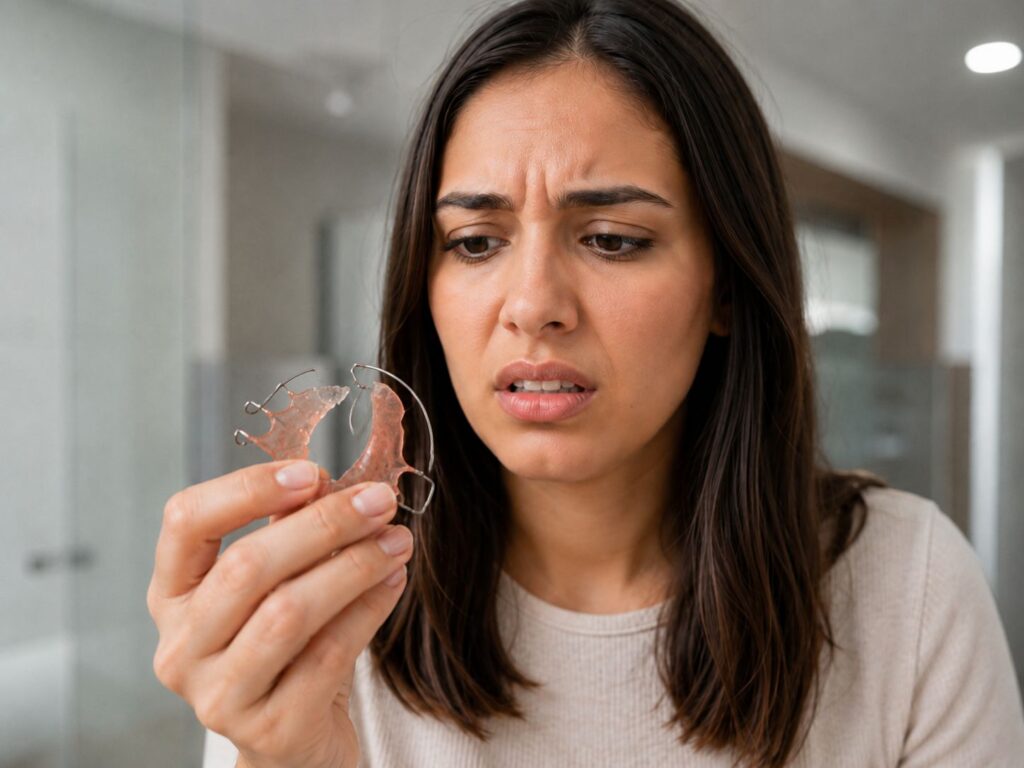
A retainer can crack, warp, come loose or suddenly stop fitting properly, sometimes long after orthodontic treatment has finished. While this is not usually a dental emergency, it is worth dealing with promptly. Retainers help hold teeth in their corrected positions, and teeth can move if retention is interrupted.
If your regular provider is closed or unavailable and you want the problem assessed sooner, an after-hours dental service may also be an option. A dentist can assess your teeth and the damaged appliance and advise whether you need a repair, replacement or further orthodontic review.
What Should You Do If Your Retainer Breaks?
The first step is to check what has happened. A clear removable retainer may crack or warp. A wire-and-acrylic retainer can develop a bent or broken wire, while a fixed retainer may detach from one or more teeth.
If the appliance is visibly damaged, sharp, distorted or painful, do not try to bend, glue or reshape it yourself. Contact your dentist or orthodontic provider so they can assess whether it can be repaired or needs replacing.
Practices offering replacement retainers can assess the appliance and your current tooth positions before making a new one if required.
What If Your Retainer No Longer Fits?
A retainer may stop fitting because your teeth have moved or because the appliance itself has become distorted or worn.
A slightly snug retainer is different from one that causes significant pain or will not seat fully over the teeth. If the retainer leaves a visible gap, feels markedly different from usual or cannot be seated properly, arrange an assessment. Your provider can determine whether the problem is tooth movement, damage to the appliance, or both.
Heat can also distort some clear plastic retainers, so avoid washing them in very hot water or leaving them in a hot car.
What If a Fixed Retainer Comes Loose?
A fixed retainer is a thin wire bonded behind the teeth. Sometimes the adhesive fails on one tooth while the rest remains attached.
A loose fixed retainer should be checked because the affected tooth may be able to move. It’s recommended having bonded retainers monitored and seeking advice if the wire becomes loose.
Avoid pulling, twisting or cutting the wire yourself. If a sharp section is irritating your tongue, orthodontic wax may provide temporary protection until you can be seen.
Is a Broken Retainer a Dental Emergency?
Usually not. A cracked removable retainer, lost retainer or detached fixed retainer is generally something to arrange promptly with your dental or orthodontic provider rather than a hospital emergency.
However, if the problem happens after hours and a sharp wire, damaged appliance or significant discomfort is difficult to manage, you may prefer to seek earlier help. An after-hours dentist may be able to assess the immediate problem and make you more comfortable, although definitive repair or replacement may still require follow-up.
If the retainer problem occurs alongside severe tooth pain, facial swelling, significant bleeding or dental trauma, seek urgent dental care rather than assuming the retainer is the only issue.
What If You Lose Your Retainer?
Contact your provider as soon as you realise it is missing.
Waiting several weeks to see whether it turns up can leave more time for unwanted tooth movement. Your dentist or orthodontic provider can advise whether a replacement should be organised and may need to scan or take an impression of your current tooth positions.
If you have an older backup retainer, do not force it into place if it no longer fits properly.
Can a Broken Retainer Be Repaired?
Sometimes. It depends on the type of retainer and the extent of the damage.
A fixed wire that has detached from a tooth may sometimes be rebonded, while some wire-and-acrylic retainers can be repaired or adjusted. Clear plastic retainers that are badly cracked, warped or worn often need replacing.
Your provider will also check whether your teeth have shifted before deciding on the best option.
What If Your Teeth Have Already Moved?
Some tooth movement does not automatically mean you need full orthodontic treatment again.
Depending on how much movement has occurred, a clinician may recommend a new retainer to hold the teeth in their current position or discuss limited orthodontic treatment if you want them moved back.
Long-term retention is recommended because some degree of post-treatment tooth movement can occur over time.
How Can You Reduce the Chance of Damaging Your Retainer?
When you remove a removable retainer, put it straight into its case. Avoid wrapping it in a tissue or leaving it loose in a pocket or bag, where it can easily be lost or damaged.
Keep it away from pets and excessive heat, and clean it according to the instructions provided by your dental or orthodontic provider.
Do not force a retainer that no longer fits or try to repair a damaged appliance yourself. Arrange an assessment so your provider can check the retainer and whether your teeth have moved.
If the problem occurs after hours and you need immediate help with discomfort or a sharp appliance, an after-hours dentist may be able to assist. Severe pain, facial swelling, significant bleeding or dental trauma should be assessed urgently.