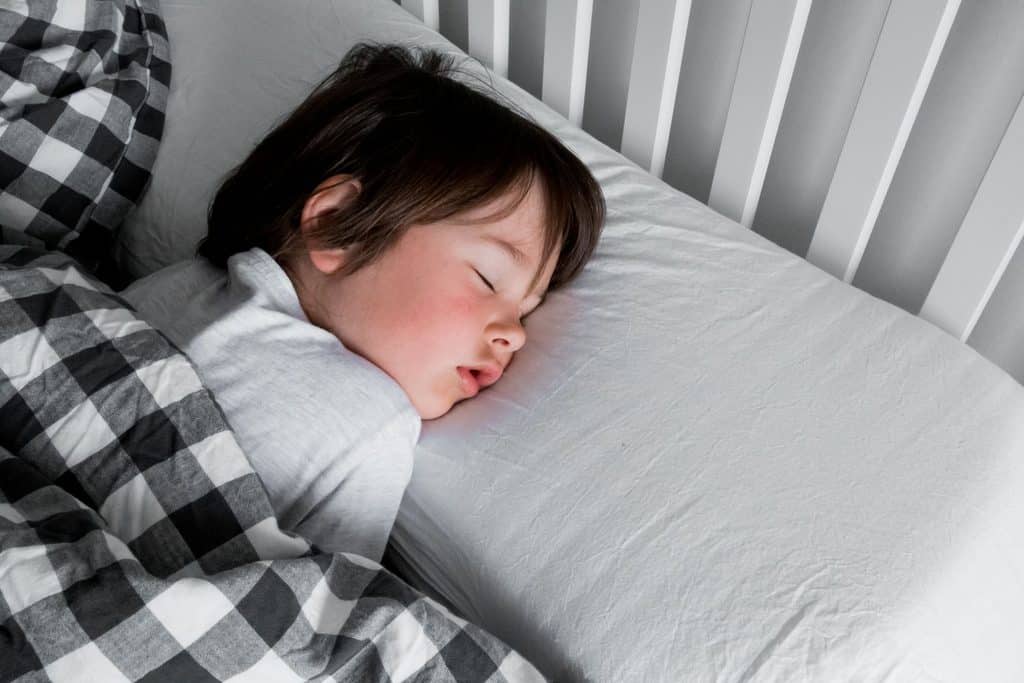
Sometimes, but only for some children, and not as a first step. If your child snores, sleeps badly or breathes through their mouth, start with your GP. Orthodontic treatment can help a small group of children whose problem continues after medical treatment, but it isn’t a general cure.
Key Takeaways
- Start with your GP. Snoring and broken sleep need a medical check first, because the cause is usually in the nose or throat.
- Removing the tonsils and adenoids is the usual first treatment for sleep apnoea in children. Up to 40% of children may still have sleep apnoea afterwards.
- For those children, widening a narrow upper jaw may be an option. The evidence for it is still limited.
What Is Sleep Apnoea in Children?
Obstructive sleep apnoea (OSA) means breathing is repeatedly interrupted during sleep because the airway narrows or closes. Researchers estimate it affects roughly 1% to 5% of children, depending on how it’s diagnosed.
It’s worth taking seriously because broken sleep in children has been linked to problems with attention, learning and behaviour. Not every child is affected, which is why a proper diagnosis matters more than a quick fix.
Why Are Orthodontists Asked About Sleep?
There are two reasons:
- Some children with sleep breathing problems also have a narrow upper jaw, and orthodontists treat jaw width.
- Breathing and facial growth seem to be linked. A review of 10 studies found that children who breathe through their mouth tended to have a narrower airway and a steeper, more backward-tilted lower jaw.
That link is an association, not proof of cause. In most of those studies, the mouth breathing was caused by enlarged tonsils or adenoids.
Can Widening the Upper Jaw Help?
Rapid maxillary expansion (RME) is a treatment that gradually widens a narrow upper jaw in a growing child. It has been studied for childhood sleep apnoea, and the evidence is mixed:
Early studies look encouraging. A review of 17 studies found better sleep test results after expansion in children with narrow palates.
Stronger studies are less convincing. A later review found only one randomised trial comparing expansion with simply waiting. It showed no significant difference. Many children’s sleep apnoea improves on its own, which may explain some of the early results.
In short, expansion is a reasonable option to discuss for the right child. It isn’t a proven treatment for every child who snores.
Does It Work for Every Child?
No. The children in the studies all had narrow or high-arched palates, and results varied depending on tonsil size and whether they’d had surgery. A child with a normal-width jaw, or whose breathing problem is mainly in the tonsils and adenoids, isn’t described as a candidate in current guidance.
Do Braces or Expanders Prevent Sleep Apnoea?
There’s no evidence that they do. The research looks at treating sleep apnoea that already exists, not preventing it. Be cautious about any claim that an appliance will cure or prevent sleep apnoea, especially if it comes without a medical assessment.
If you’re wondering what orthodontic treatment can cost, it helps to compare full treatment plans, not just the first quote.
What Should I Do If I’m Worried About My Child’s Sleep?
- See your GP first. Raise persistent snoring, restless or disturbed sleep, and unexplained daytime tiredness.
- Get the nose, tonsils and adenoids checked. This is part of the medical assessment.
- Ask about the upper jaw if sleep apnoea continues. If your child is found to have a narrow upper jaw, a specialist orthodontist can advise whether expansion is appropriate, usually as part of wider care.
Why See a Specialist Orthodontist?
Deciding whether a child with sleep breathing problems could benefit from orthodontic treatment takes both medical and orthodontic judgement. Specialist orthodontists of the New Zealand Association of Orthodontists (NZAO) have completed two to three years of full-time postgraduate training beyond their dental degree.
Frequently Asked Questions
Can Braces or Expanders Cure Sleep Apnoea in Children?
Not as a general rule. Surgery is the usual first treatment, and orthodontic treatment may be considered for selected children whose sleep apnoea continues afterwards.
Is Surgery Always Needed First?
It’s the standard first-line treatment, but your doctor will advise what’s right for your child.
What Is Rapid Maxillary Expansion?
It’s an orthodontic treatment that gradually widens a narrow upper jaw in a growing child. It’s used for several orthodontic reasons and has also been studied for childhood sleep apnoea.
Does Mouth Breathing Change a Child’s Face?
It’s linked to differences in jaw growth, but the studies can’t prove it causes them. Enlarged tonsils and adenoids were the most common cause of mouth breathing in the research.
Should I See an Orthodontist or a Doctor First?
Your GP. Sleep and breathing problems need a medical check first, and an orthodontist can advise if a narrow upper jaw is part of the picture.
Does a Narrow Upper Jaw Cause Sleep Apnoea?
The research doesn’t show that. Studies looked at children who have both, and the guideline applies only to children whose sleep apnoea continues and who have a narrow jaw.
Find a Registered Specialist Orthodontist
If you’d like an orthodontic assessment of your child’s upper jaw, you can find a registered specialist through the NZAO directory.
This article is for general education only and does not replace individual advice from a registered health professional. If you’re concerned about your child’s breathing or sleep, please see your doctor.