So you’ve been dealing with irregular periods, unwanted hair growth, or weight that seems impossible to shift? You’ve probably come across the term PCOS in your research. But here’s something that might surprise you: PCOS isn’t just an ovary problem. It’s actually closely linked to how your body handles sugar and insulin.
What Actually Is PCOS?
Polycystic Ovary Syndrome, commonly known as PCOS, affects about one in ten women in Australia and New Zealand – so if you’ve got it, you’re definitely not alone. Despite the name suggesting it’s all about cysts on your ovaries, PCOS is actually much more complex than that.
PCOS is a hormonal disorder that affects your entire endocrine system – basically the network of glands that produce hormones throughout your body. While it does involve your ovaries, it’s really about your body’s hormones and metabolism getting their wires crossed.
Here’s what’s actually happening: your ovaries may develop small fluid-filled sacs (the “cysts” in the name), but not everyone with PCOS has these. More importantly, your body starts producing higher levels of male hormones (androgens) than it should, and this throws your whole system out of whack.
The condition affects three main areas:
- Your ovaries and periods – irregular ovulation, missed periods, or no periods at all
- Your hormone levels – particularly elevated androgens, which cause many of the visible symptoms
- Your metabolism – how your body processes insulin and stores fat
Essentially, your body’s internal messaging system starts sending mixed signals, which can affect everything from your periods to your energy levels to how your body stores fat. It’s like having multiple systems in your body trying to do different things at once, rather than working together harmoniously.
Understanding Insulin Resistance
Before we get into the PCOS connection, let’s talk about insulin resistance. Think of insulin like a key that opens the door to your cells so sugar can get in and be turned into energy. When you have insulin resistance, it’s like the locks have become sticky – the key still works, but you need to use more of it to get the job done.
Your pancreas responds by producing extra insulin, which can lead to:
- Increased inflammation in your body
- Weight gain, especially around your middle
- Higher risk of developing type 2 diabetes
- And yes, PCOS symptoms
The PCOS-Insulin Resistance Connection
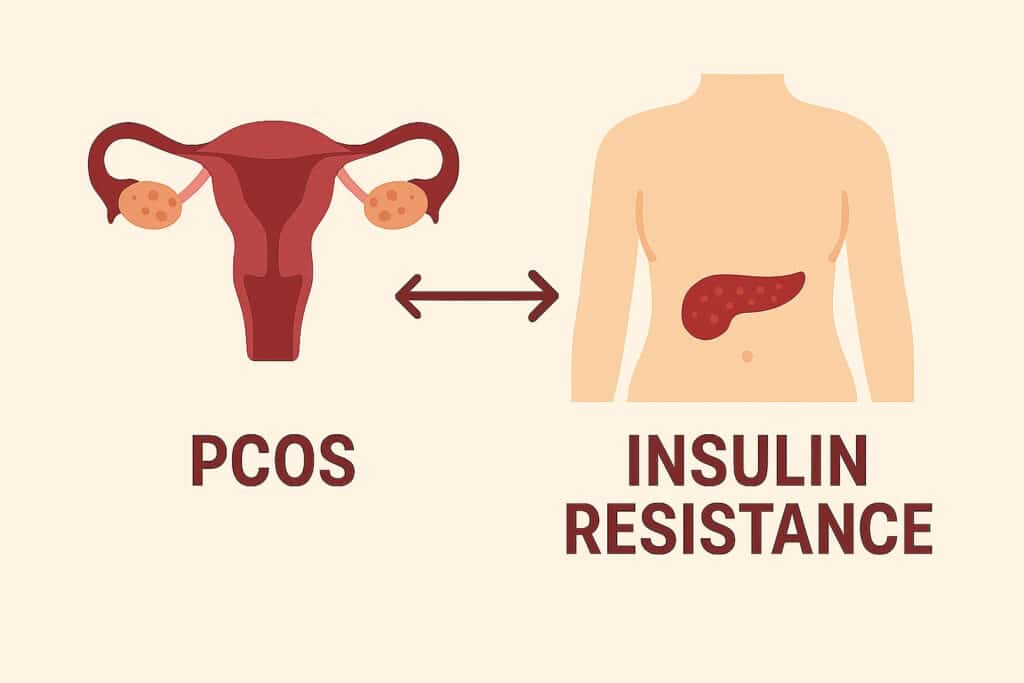
Here’s where things get frustrating: about 85% of women with PCOS also deal with insulin resistance. And they don’t just happen to occur together – they actually make each other worse.
When your insulin levels are high, your ovaries start producing more male hormones (technically called androgens). This creates many of the classic PCOS symptoms:
- Periods that are irregular or don’t come at all
- Unwanted hair growth on face and body
- Persistent acne
- Difficulty losing weight
- Hair thinning on your head
It’s basically a frustrating cycle – insulin resistance makes PCOS worse, and PCOS symptoms can worsen insulin resistance.
Who’s More Likely to Experience This?
While PCOS can develop in any woman, some factors increase your likelihood:
- Family history – If your mum or sister has PCOS or diabetes, your risk increases
- Weight – Carrying extra weight, especially around your middle, can worsen insulin resistance
- Lifestyle factors – Limited physical activity, poor sleep, and chronic stress
- Age – PCOS typically appears during your teens or twenties
Important note: you don’t need to be overweight to have insulin resistance. Many lean-body women with PCOS (about 75%) still experience insulin issues. Your body can appear healthy on the outside while insulin resistance develops internally.
Getting a Proper Diagnosis
If you think you might have PCOS and insulin resistance, your GP will likely run several tests. These include blood tests to check your hormone and insulin levels, plus possibly an ultrasound to examine your ovaries.
The tricky thing about PCOS is there’s no single definitive test. Your doctor needs to look at the complete picture – your symptoms, test results, and medical history – to make the diagnosis. It can take time, which is frustrating when you just want clear answers.
So What Can You Actually Do About It?
The good news is there’s quite a lot you can do to manage both PCOS and insulin resistance through lifestyle changes. You don’t need dramatic overhauls – small, consistent changes can make a real difference to how you feel.
Eating for Better Insulin Sensitivity
You don’t need to follow restrictive diets or ban food groups. It’s more about making smart choices that help keep your blood sugar stable.
Include more of these:
- Complex carbohydrates that won’t spike your blood sugar (brown rice, quinoa, sweet potato)
- Plenty of vegetables, especially colourful ones
- Lean proteins that keep you satisfied (fish, chicken, eggs, legumes)
- Healthy fats your hormones need (avocado, nuts, olive oil, salmon)
Try to limit:
- Sugary drinks and heavily processed foods
- Refined carbs like white bread that cause blood sugar spikes
- Large amounts of fruit juice (whole fruit is fine)
- Excessive caffeine and alcohol
Helpful tip: pair carbohydrates with protein or healthy fats. Instead of eating toast alone, add avocado and eggs. This helps prevent blood sugar spikes that can worsen insulin resistance.

Getting Your Body Moving
Exercise works really well for insulin resistance, but you don’t need to become a fitness fanatic. Even moderate activity can make a significant difference.
The target is around 150 minutes per week, which works out to roughly 30 minutes, five times a week. Mix different types – some cardio you enjoy (walking, swimming, dancing) and some strength training (weights, resistance bands, or bodyweight exercises).
Even a simple walk after dinner helps your muscles use glucose more effectively and improves insulin sensitivity. Your body responds well to consistent movement, regardless of intensity.
Managing Stress and Sleep
This can be challenging, but getting your stress and sleep under control is crucial for hormonal balance.
Chronic stress increases cortisol levels, which can worsen insulin resistance. Some effective stress management techniques include:
- Meditation or mindfulness apps
- Deep breathing exercises during stressful moments
- Yoga or gentle stretching
- Whatever genuinely helps you relax – reading, gardening, listening to music
Aim for 7-9 hours of quality sleep per night. Poor sleep significantly impacts insulin sensitivity and can worsen PCOS symptoms. It’s worth prioritising good sleep habits where possible.
Supplements to Consider
While lifestyle changes are your foundation, some supplements show promise for PCOS and insulin resistance. Always consult with your GP or a nutritionist before starting new supplements – don’t rely solely on online information.
Inositol appears to be particularly helpful. Research suggests it can improve insulin sensitivity and may help regulate periods. Most studies use doses between 1.2-4 grams daily, but professional guidance is important for proper dosing.
Magnesium is worth considering since many people have insufficient levels. It supports insulin sensitivity and can improve sleep quality as well.
Some people find berberine helpful for blood sugar control, though it can interact with certain medications, so medical supervision is essential.
Understanding Fructose
Here’s something interesting from recent research: not all sugars affect your body the same way. The fructose in whole fruit is generally beneficial and doesn’t cause problems. However, consuming large amounts of fructose from soft drinks, sweets, and processed foods can be particularly problematic for insulin resistance.
This doesn’t mean you need to avoid fruit – just be mindful of how much processed sugar you’re consuming through drinks and packaged foods. Your body processes an apple very differently from a soft drink, even though both contain fructose.
Medical Treatment Options
Sometimes lifestyle changes aren’t sufficient on their own, and that’s completely normal. Several medical treatments can provide additional support:
Metformin is commonly prescribed for insulin resistance in PCOS. Originally a diabetes medication, it can help improve insulin sensitivity and may assist with weight management and period regulation.
Hormonal contraceptives can help regulate cycles and reduce some PCOS symptoms, though they may have some impact on insulin sensitivity – this is worth discussing thoroughly with your doctor.
For specific symptoms like excessive hair growth or severe acne, other medications are available. Your GP can discuss the various options based on your individual symptoms and concerns.
Long-term Health Considerations
Having PCOS with insulin resistance does increase your risk of type 2 diabetes and heart disease later in life. However, the lifestyle changes that help manage PCOS and insulin resistance also significantly reduce these long-term risks.
Regular check-ups with your GP are important to monitor your blood pressure, cholesterol, and blood sugar levels over time. Think of these as preventive health measures that can catch any changes early.
The Bottom Line
PCOS and insulin resistance can be challenging, but understanding their connection gives you more control over your health. Small, consistent changes to your eating habits, exercise routine, stress management, and sleep can make a genuine difference to how you feel.
Remember, every woman’s experience with PCOS is unique. What works well for your friend might not be the perfect solution for you, and that’s completely normal. The key is finding an approach that suits your lifestyle and helps you feel better.
If you’re experiencing symptoms that might be related to PCOS or insulin resistance, don’t hesitate to speak with your GP. Proper testing and possibly working with specialists can help you develop a management plan tailored to your needs.
Most importantly, you’re not alone in this journey, and with the right approach, you can effectively manage both PCOS and insulin resistance.
Looking to read further about women’s health on the other side of the spectrum? Check out our article debunking the myths of women’s menopause.
Disclaimer: This article provides general information and doesn’t replace professional medical advice. Always consult with your doctor or healthcare provider for diagnosis and treatment options.