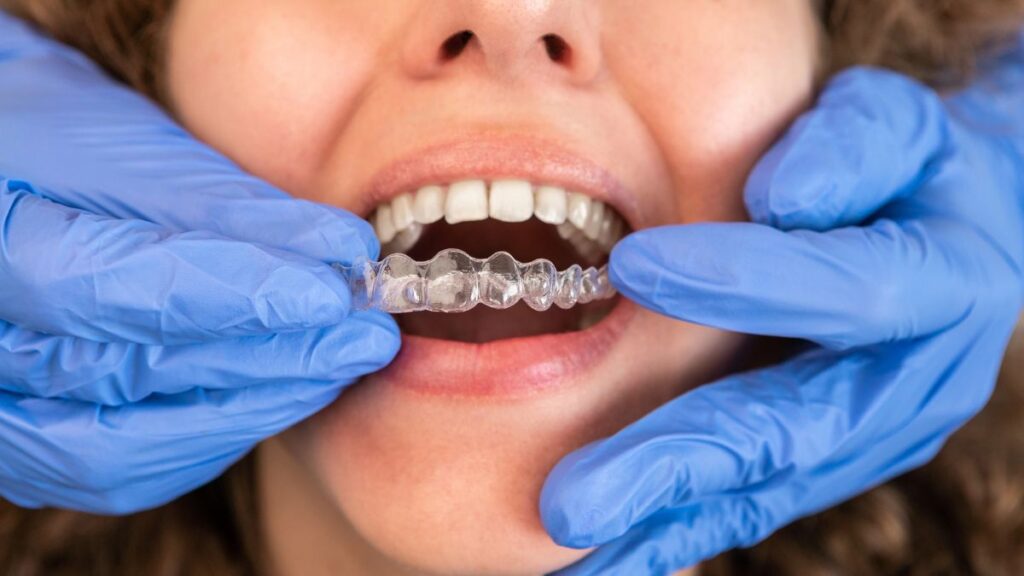
Invisalign is often described as “simple” because the aligners are clear and removable. The reality is that predictable tooth movement usually needs more than the tray alone. That is where attachments come in.
Attachments are small, tooth-coloured shapes bonded to specific teeth. They help the aligners grip, apply force, and move teeth in the right direction. If they feel odd at first, or one comes off mid-treatment, it is usually manageable once the basics are clear.
Key Takeaways
- Attachments are tooth-coloured composite “handles” that help aligners move teeth more predictably
- The first week is usually the hardest for comfort, eating, and speech
- Most eating issues come from attachments when aligners are out, not when they’re in
- If an attachment comes off, it is rarely urgent, but tracking can suffer if it is ignored
- A few practical habits reduce rough edges, staining, and repeat repairs
What attachments are and what they are not
Attachments are not the aligner tray. The aligner is the clear plastic appliance that sits over the teeth. Attachments are the small bonded shapes on the tooth surface that the aligner engages with.
Some patients also hear about “buttons” and assume it is all the same thing. Buttons are typically used when elastics are part of the plan. Attachments are more common and may be used with or without elastics, depending on the bite and the movements required.
How attachments are placed and removed
Attachments are usually made of dental composite, similar to a filling material. The tooth is cleaned and prepared, a bonding agent is applied, and composite is set in a specific shape using a template that matches the digital plan.
Removal at the end of treatment is also routine. The composite is carefully polished away, and the enamel surface is smoothed.
Why attachments exist in the first place
Clear aligners work by applying force through plastic that wraps around the teeth. That is effective for some movements, especially minor tipping. It is less reliable for movements that need strong grip, controlled rotation, or deeper root control.
Attachments act like small handles. They give the aligner a shape to engage so the force is directed correctly. That matters when the goal is not just straight teeth, but a stable bite that functions well.
Movements attachments help with most
Attachments are commonly used to support rotations, vertical movements such as extrusion or intrusion, and bodily movement where the root needs to move with the crown, not just tip.
When people say an aligner case “tracked,” it usually means each tray seated fully at every stage. Attachments often play a major role in that fit.
Why Invisalign attachments are common in New Zealand
In New Zealand, many adults choose clear aligners because they want subtle treatment around work and social life. That can create the idea that treatment is mainly cosmetic. In practice, adult cases often include bite issues, wear patterns, and long-standing crowding that need controlled mechanics.
Attachments allow more predictable movement without switching to braces. That is why they appear so often in aligner plans, even for patients who think they only have a minor issue.
For patients wanting broader orthodontic guidance and provider standards, the New Zealand Association of Orthodontists is a reputable place to start when checking credentials and orthodontic care information.
What attachments feel like in the first week
Most attachment complaints happen early. The mouth notices every new surface, especially when a smooth tooth now has raised areas.
With aligners in, attachments are usually covered, so they are less noticeable. With aligners out, they can feel rough, and the tongue tends to fixate on them for a few days.
Pressure versus pain
Some pressure is normal when moving to a new aligner. It often peaks in the first day or two, then eases. A sharp pain that persists, or a tray that will not seat fully even with good wear time, deserves a check.
Sometimes the real culprit is the tray edge, not the attachment. If a tray edge is rubbing the gum, it can often be adjusted by the provider.
Eating with attachments: what changes
Eating is where attachments surprise people most. Not because chewing is difficult, but because food can catch around attachments when aligners are out.
Most patients are advised to remove aligners for meals. That means the attachments are exposed, and sticky or fibrous foods can collect around them. This is annoying, but it is predictable and manageable.
Hard foods can increase the chance of an attachment debonding. That does not mean eating needs to be restrictive. It means chewing thoughtfully and cleaning properly after meals.
Comfort fixes that actually work
The goal is a routine that reduces irritation and keeps trays seating fully.
If irritation is coming from the tray edge, orthodontic wax can help short-term. If an attachment feels sharp, it is often a small composite edge that can be smoothed by the provider. Avoid attempting to file it at home because the shape affects how the aligner grips.
For cleaning, use a soft brush and lukewarm water. Hot water can distort aligners. Harsh abrasives can dull trays and roughen surfaces, which can make staining worse.
Dry mouth can also make everything feel more irritating. Regular water intake and consistent wear tend to settle this faster than on-and-off wear.
Repairs: what to do if an attachment comes off
Attachments can debond in real life. It happens even with good technique. The key is to stay calm and protect tracking.
Why attachments come off
Common triggers include biting hard foods, habits like nail biting or chewing pens, and removing aligners by pulling from one side only, which twists the tray over the attachment.
What to do immediately
Keep wearing the aligners as instructed. Stopping wear usually creates a bigger problem than the missing attachment.
Take a clear photo and note which tooth it came from. Contact the provider and explain when it happened and which aligner stage you are on. They can advise whether it needs rebonding soon or can wait until the next scheduled visit.
When it needs faster attention
If the aligner stops seating fully, feels loose, or shows visible gapping that was not there before, the missing attachment may be affecting tracking. In that case, it is worth contacting the clinic sooner.
If trays stop fitting as expected after an attachment comes off, it can sometimes lead to extra aligners later on, which is covered in this guide to refinements for clear aligners.
Preventing repeat breakages and staining
Most repeat problems are habit-related.
A safer removal method is to lift from the back molars on both sides, then peel forward gently. Pulling from the front or yanking from one side can stress attachments.
Composite can stain over time, especially with frequent coffee, tea, curry, and smoking. Good brushing and rinsing help. Some staining is cosmetic and usually disappears when attachments are removed at the end.
New Zealand expectations: visits, timing, and keeping treatment on track
Most rebond appointments are quick, but the impact depends on which attachment was lost and how long it is left. The bigger risk is letting tracking drift until later trays stop fitting.
A practical approach is to ask which attachments are “key” for the plan, what signs of poor tracking to watch for, and whether the removal technique is stressing the aligners. Those questions reduce repeat issues and protect the treatment timeline.
Keeping results predictable without overthinking it
Attachments are part of the plan, not an add-on. They help aligners deliver controlled movement and a stable bite, which matters as much as appearance.
Wear time, cleaning, and careful removal keep Invisalign treatment moving smoothly, including for patients across New Zealand balancing busy schedules.