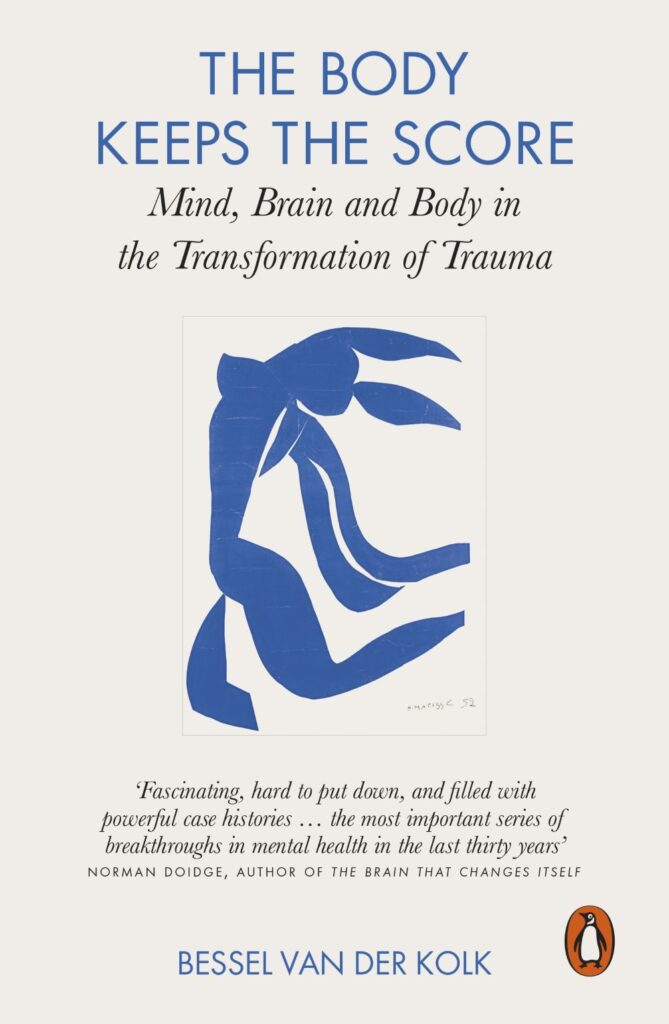
Title: The Body Keeps the Score: Brain, Mind, and Body in the Healing of Trauma
Author: Dr. Bessel van der Kolk
Publisher: Viking (Penguin Random House)
First Published: 2014
Is the body still keeping score? Revisiting a trauma classic in 2025
Ten years after its initial release, The Body Keeps the Score remains one of the most cited and circulated books in the wellness world, and one of the most polarising. As more New Zealanders engage with trauma-informed care, somatic therapies, and nervous system regulation, Bessel van der Kolk’s seminal work continues to shape both mainstream understanding and clinical practice. But does it hold up in a wellness landscape that has evolved dramatically since 2014?
This review is not for those looking for hype or hero worship. It is for readers asking: “Should I still read this in 2025? Does it offer value beyond the soundbites and Instagram quotes?” For many, the decision to tackle a book of this size and emotional weight is not a light one, and weighing its value today requires looking at both its achievements and its shortcomings.
The premise that redefined trauma
Van der Kolk, a Dutch-American psychiatrist and trauma researcher, presents a bold thesis: trauma does not just haunt memory, it reshapes the body. Through research, clinical case studies, and first-hand accounts, he shows how unresolved trauma embeds itself neurologically, physiologically, and emotionally, often outside conscious awareness. This central idea has become common language across therapy rooms, classrooms, and even workplaces.
This is not a light read. The early chapters delve into war trauma, childhood abuse, and clinical cases that may overwhelm some readers. Yet it is this raw clarity that made the book groundbreaking: trauma, van der Kolk argues, is not a weakness or moral failure. It is a biological injury. By framing trauma in this way, the book helped to remove stigma and shifted the conversation toward compassion and medical understanding.
A broad-spectrum toolkit, or a clinical wishlist?
One of the book’s most referenced strengths is its openness to non-traditional therapies: yoga, EMDR, neurofeedback, drama therapy, rhythmic movement. Van der Kolk’s refusal to lean solely on talk therapy is arguably the most progressive aspect of the text. He makes a compelling case for bottom-up healing: if trauma lives in the body, then body-based therapies are not optional, they are essential.
But here is where the book shows its age. Many of the therapies discussed are still inaccessible to the average reader, particularly in Aotearoa. Neurofeedback remains costly and largely confined to specialised clinics. Trauma-informed yoga is growing, but often available only in urban pockets or through boutique programmes. The book names possibilities without always addressing systemic barriers to access, leaving many readers inspired but unsure how to take practical steps forward. A decade later, this remains one of the most significant gaps.
Scientific rigour versus narrative persuasion
Some critics argue that van der Kolk blends science and storytelling too freely, presenting correlation as causation or leaning heavily on personal experience. While the book is deeply informed by research, it does not always read like a scientific text, and perhaps it is not meant to. Instead, it sits somewhere between memoir, clinical manual, and cultural commentary.
For many readers, this is part of its brilliance. The storytelling humanises the content and opens the door for self-recognition. For others, particularly clinicians or those in academic fields, the looseness can feel frustrating or even careless. If you are looking for a manual, this is not it. If you are looking for a lens, it still offers a powerful one. The tension between accessibility and scientific precision is what continues to spark debate.
Much like trauma, chronic stress and burnout also reshape the body and mind over time, and our guide to recognising study stress and academic burnout shows how these patterns can emerge in everyday life.
Impact beyond the page
Part of why this book still matters is the impact it has had on the broader wellness and healthcare landscape. Concepts such as body memory, somatic regulation, and the importance of safe relationships are now integrated into counselling practices and workplace wellbeing programmes. The book has inspired new training for teachers, healthcare providers, and even yoga instructors who want to be trauma-informed. Its influence stretches beyond the clinic and into everyday wellness culture.
At the same time, there is risk in oversimplification. Phrases from the book are quoted widely on social media, sometimes divorced from context, and used as quick fixes rather than deep insights. Readers today must be careful to separate enduring wisdom from surface-level slogans.
Who this book is (still) for
- Anyone seeking to understand why trauma is more than a memory
- Readers exploring body-based approaches to healing
- Therapists and health practitioners open to integrative models
- Wellness professionals aiming to bridge neuroscience and holistic practice
It may not be ideal for:
- Readers needing highly structured self-help tools
- Those looking for trauma-specific protocols
- Anyone uncomfortable with detailed case descriptions of abuse and PTSD
Verdict: Worth reading, but read wisely
The Body Keeps the Score remains essential reading, not because it has all the answers, but because it reframed the question. It legitimised the body in emotional healing. It shifted trauma from the margins to the centre of health and wellness discourse. For that reason alone, it deserves its place on the shelf of anyone working in or around wellness.
Yet in 2025, we can read it more critically. We can celebrate its influence while acknowledging its limitations. We can contextualise it within a broader conversation about access, equity, and evolving trauma science. A thoughtful reading means not only absorbing its lessons but also questioning its blind spots and seeking out complementary perspectives.
As the wellness world matures, so must its canon. Van der Kolk’s work remains a pillar, but one best read in dialogue with what has come since. Pairing it with newer works on trauma, resilience, and social determinants of health makes for a richer understanding of the field.
Final Rating: 4 out of 5
Reviewed by Claire Whitford