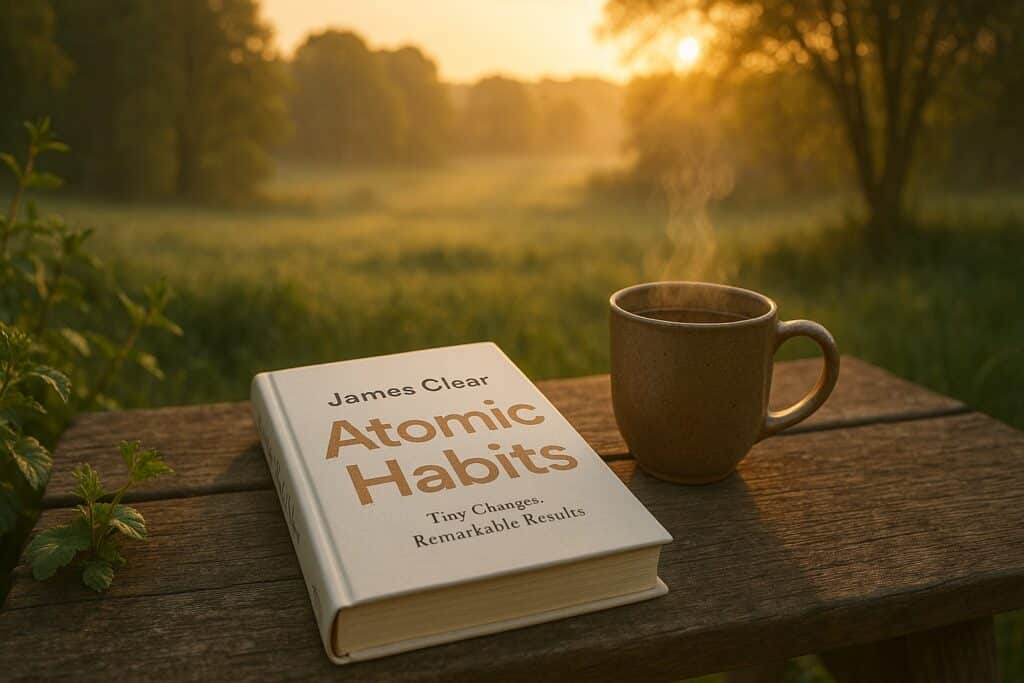
Book Review: Atomic Habits by James Clear
A Personal Wellness Game-Changer for Kiwis
Rating: ★★★★★
In a culture where we’re increasingly aware of mental health challenges and the pressures of modern living, James Clear’s “Atomic Habits” arrives as a refreshingly practical guide to sustainable personal change. For New Zealanders juggling work-life balance in our fast-paced society, this book offers something our wellness industry often lacks: a systematic, science-backed approach to building healthy habits that actually stick.
Clear’s central premise is elegantly simple: small changes compound into remarkable results. Rather than promoting the dramatic lifestyle overhauls that dominate social media wellness culture, he advocates for “atomic habits” – tiny changes that are easy to implement but powerful in their cumulative effect. This approach feels particularly relevant in New Zealand, where our pragmatic, no-nonsense culture often clashes with flashy wellness trends imported from overseas.
The Four Laws That Actually Work
The book’s framework revolves around four laws of behaviour change, and each one resonates strongly with common Kiwi wellness struggles:
Make it Obvious speaks to our tendency to rely on willpower alone. Clear shows how environmental design trumps motivation every time. Instead of promising yourself you’ll exercise more, lay out your gym clothes the night before. For busy Auckland commuters or Wellington workers, this might mean keeping walking shoes at the office or packing healthy snacks in visible spots in your bag.
Make it Attractive tackles the reality that green smoothies and early morning runs aren’t inherently appealing to most people. Clear’s habit stacking technique – pairing a new habit with something you already enjoy – offers genuine solutions. Listen to your favourite podcast only while walking, or watch Netflix only while on the exercise bike.
Make it Easy is perhaps the most liberating section for anyone who’s ever felt defeated by ambitious wellness goals. Clear advocates for the “two-minute rule” – scaling habits down until they take less than two minutes to complete. This approach dismantles the all-or-nothing mentality that sees many Kiwis abandon their fitness routines after a few weeks.
Make it Satisfying addresses our need for immediate gratification in a world of long-term wellness goals. Clear’s suggestions for tracking progress and celebrating small wins provide the dopamine hits our brains crave while building toward larger health objectives.
Beyond Individual Change
What sets “Atomic Habits” apart from typical self-help fare is its recognition that personal change doesn’t happen in a vacuum. Clear discusses the profound impact of social environment on our habits – something particularly relevant in New Zealand’s tight-knit communities where social expectations can either support or undermine wellness goals.
His insights about identity-based habits are transformative for anyone struggling with self-perception around health and fitness. Rather than focusing on outcomes (“I want to lose 10kg”), Clear encourages readers to focus on identity (“I am someone who takes care of their health”). This shift can be particularly powerful for New Zealanders dealing with cultural attitudes around body image and masculine stereotypes that discourage men from prioritising wellness.
Practical Applications for Kiwi Life
The book shines in its practical applications. Clear provides concrete strategies that translate seamlessly to New Zealand contexts:
For shift workers in industries like healthcare or hospitality, his advice on habit stacking can help maintain routines despite irregular schedules. For parents juggling school runs and after-school activities, his emphasis on environment design offers realistic ways to prioritise self-care without major lifestyle disruptions.
The chapter on breaking bad habits is particularly valuable in addressing issues like excessive screen time, emotional eating, or the social drinking culture that’s deeply embedded in New Zealand social life. Clear’s approach isn’t about shame or restriction, but about understanding the cues and rewards that drive unwanted behaviours.
A Few Considerations
While “Atomic Habits” is remarkably comprehensive, readers should be aware that it requires genuine commitment to implementation. The book isn’t a passive read – it’s a workbook that demands active engagement with its principles. Some may find Clear’s systematic approach too structured, particularly if they’re drawn to more intuitive or holistic wellness approaches.
Additionally, while Clear addresses systemic factors that influence habits, the book remains fundamentally focused on individual change. Readers facing significant mental health challenges or dealing with systemic barriers to wellness may need additional support beyond habit formation.
The Bottom Line
“Atomic Habits” succeeds where many wellness books fail because it acknowledges the gap between knowing what’s good for us and actually doing it. Clear provides a bridge across that gap with tools that are both evidence-based and remarkably practical.
For New Zealanders tired of wellness advice that feels disconnected from real life – with its demands for expensive supplements, exotic superfoods, or time-intensive routines – this book offers something more valuable: a sustainable path to lasting change that respects both our constraints and our aspirations.
Whether you’re a busy professional in one of our major centres, a rural New Zealander with limited access to wellness resources, or someone simply looking to improve your relationship with health and self-care, “Atomic Habits” provides tools that work within the reality of modern Kiwi life.
This isn’t just another self-help book to add to your collection – it’s a practical manual for anyone serious about making personal wellness a sustainable part of their life. In a country where we value authenticity and practical solutions, Clear’s approach feels both genuine and achievable.
Recommended for: Anyone struggling to maintain healthy routines, professionals seeking sustainable wellness practices, and readers who prefer evidence-based approaches to personal development.
Available: At all major New Zealand bookstores, including Paper Plus, Whitcoulls, and independent bookshops nationwide.