Staying active is one of the most effective ways to support your health and independence as you age. Movement doesn’t have to mean intense workouts or punishing routines, small, consistent choices to keep your body moving can make a huge difference in how you feel, function, and age.
Whether you’re in your 40s, 60s, or beyond, it’s never too late to start moving your way to better health.
Why Movement Matters as You Age
As we age, our bodies naturally go through changes, muscle mass decreases, bones become more fragile, and joints can stiffen. Regular movement helps counteract these effects and supports long-term vitality.
Benefits of Staying Active:
- Stronger Muscles and Bones – Weight-bearing exercises like walking or light resistance training help protect against osteoporosis and maintain strength.
- Better Balance and Coordination – Activities like yoga, Pilates, or tai chi reduce the risk of falls by improving stability.
- Improved Heart Health – Regular movement keeps blood pressure, cholesterol, and circulation in check.
- Sharper Mind and Mood – Exercise releases endorphins, lowers stress, and may help protect against cognitive decline.
- Increased Independence – Staying active makes daily activities like climbing stairs, gardening, or carrying groceries easier for longer.
How Much Movement Do You Need?
The World Health Organisation (WHO) recommends that adults over 65 aim for:
- At least 150 minutes of moderate-intensity activity per week (such as brisk walking, cycling, or swimming).
- Muscle-strengthening activities at least twice a week.
- Balance and flexibility training on 3 or more days a week to reduce fall risk.
The good news? You don’t have to do it all at once, breaking activity into 10–15 minute sessions still adds up to big health gains.
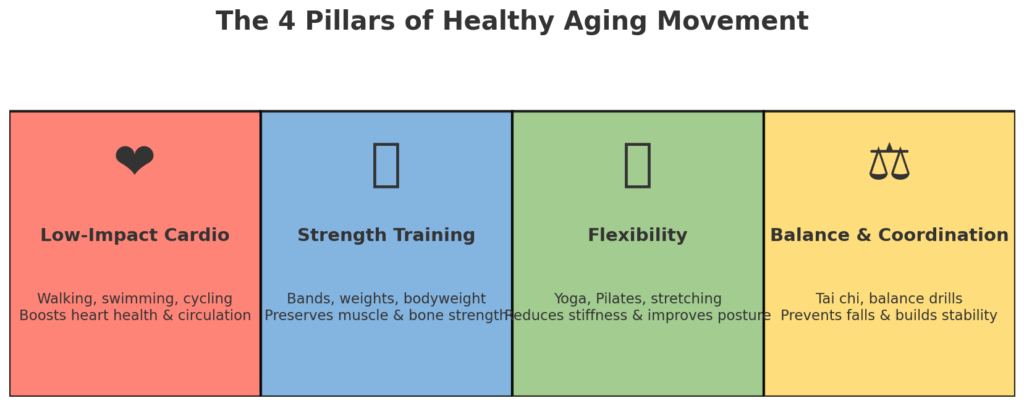
Types of Movement That Support Healthy Aging
To age well, you’ll want a mix of exercises that support your heart, muscles, flexibility, and balance. Each type of movement plays a role in keeping your body strong, mobile, and independent.
Low-Impact Cardio
Low-impact cardiovascular exercise raises your heart rate without putting excessive strain on your joints. This makes it ideal if you’re managing arthritis, stiffness, or past injuries.
Examples include:
Brisk walking around your neighbourhood or on a treadmill.
Swimming or water aerobics, which provide resistance while reducing joint impact.
Cycling on a stationary or outdoor bike for endurance and leg strength.
Benefits: Improves heart and lung health, supports weight management, boosts circulation, and increases overall energy levels.
Strength Training
As we age, muscle mass naturally declines, a process called sarcopenia. Strength training helps slow this decline while protecting bone density. You don’t need heavy weights; even light resistance is effective when done regularly.
Examples include:
Bodyweight exercises like squats, wall push-ups, and step-ups.
Resistance bands for bicep curls, shoulder presses, and seated rows.
Light dumbbells or kettlebells for strengthening arms, legs, and core.
Benefits: Builds muscle, supports metabolism, reduces the risk of osteoporosis, and makes everyday activities (like lifting groceries or climbing stairs) easier.
Flexibility Exercises
Flexibility tends to decrease with age, leading to stiffness and reduced mobility. Regular stretching keeps muscles supple and joints healthy, making movement more comfortable.
Examples include:
Gentle stretching of hamstrings, calves, shoulders, and hips after activity.
Yoga for improved range of motion, relaxation, and balance.
Pilates for controlled stretching paired with core strengthening.
Benefits: Reduces stiffness, improves posture, enhances mobility, and lowers the risk of muscle strains.
Balance and Coordination Work
Falls are one of the biggest health risks for older adults, but balance training dramatically reduces this risk. By challenging stability and coordination, you strengthen the muscles and reflexes needed to stay steady.
Examples include:
Tai chi is a gentle martial art focusing on slow, flowing movements.
Heel-to-toe walking or standing on one leg.
Using balance tools like stability balls or wobble boards (if safe to do so).
Benefits: Improves coordination, reduces the risk of falls, builds confidence in movement, and supports long-term independence.
Together, these four movement types form a well-rounded approach to healthy aging, helping you stay active, independent, and resilient well into your later life.
Tips to Stay Motivated
- Start small: A 10-minute walk after dinner can grow into a daily routine.
- Find activities you enjoy: Dancing, gardening, or playing with grandkids count as movement, too.
- Stay social: Join a walking group or fitness class, community makes it more fun and helps you stick with it.
- Listen to your body: Consistency is more important than intensity. Rest when needed, and build up gradually.
Example Weekly Movement Plan for Healthy Aging
This plan follows WHO guidelines for adults 65+ and can be adapted to suit your fitness level and mobility. Always check with your doctor before starting a new exercise routine.
Day 1 – Cardio & Stretch
- 20–30 minutes brisk walking (outdoors or treadmill).
- 10 minutes of gentle stretching (hamstrings, calves, shoulders).
Day 2 – Strength Training
- Light resistance band exercises (bicep curls, seated rows, squats).
- 2 sets of 10–12 reps for each exercise.
- Finish with balance practice: standing on one leg for 20 seconds each side.
Day 3 – Flexibility & Balance
- 30 minutes of yoga, Pilates, or tai chi (in class or at home).
- Focus on movements that improve posture, flexibility, and stability.
Day 4 – Active Rest
- Light activities like gardening, housework, or a gentle stroll.
- Aim for at least 20 minutes of movement.
Day 5 – Cardio Interval Walk
- 25–30 minutes of walking, alternating between normal pace and brisk pace every 2 minutes.
- End with 5 minutes of deep breathing and light stretches.
Day 6 – Strength Training
- Bodyweight moves like wall push-ups, seated chair squats, and calf raises.
- 2–3 sets of 10 reps each.
- Balance practice: heel-to-toe walk across the room.
Day 7 – Flexibility & Relaxation
- 20–30 minutes of gentle yoga or stretching.
- Include slow breathing exercises for relaxation.
- Pro Tip: Mix and match according to your energy levels. Even if you only manage 10 minutes, consistency matters more than perfection.
Final Thoughts
Healthy aging isn’t about pushing yourself to the limit, it’s about moving in ways that support your body, mind, and independence. Whether it’s a brisk walk, a yoga class, or lifting light weights, every step you take keeps you stronger, happier, and more resilient.
So, move your way to better health, because the more you move, the more life you can enjoy.