
New Zealand’s natural beauty and clean reputation often lead people to believe that we’re immune to air quality issues, but for the thousands of Kiwis who suffer from seasonal allergies, that’s far from the truth.
From rising pollen counts in spring to smoky air in winter, the air we breathe can trigger everything from itchy eyes to asthma flare-ups. In this article, we’ll explore how New Zealand’s air quality impacts seasonal allergies, what causes these issues, and how to manage them throughout the year.
What Causes Seasonal Allergies in New Zealand?
Seasonal allergies, medically referred to as allergic rhinitis and commonly known as hay fever, occur when your immune system reacts to airborne substances that are ordinarily harmless, like pollen, mould spores, or dust.
In New Zealand, one of the main causes of allergic reactions is pollen, particularly from grasses, trees, and weeds that thrive in our temperate climate. The pollen count tends to spike during the spring and summer months, but symptoms can linger into autumn, depending on the weather and specific plant cycles.
In addition to pollen, indoor allergens such as dust mites, pet dander, and mould can trigger allergic reactions year-round, especially in damp or poorly ventilated homes. Many older Kiwi homes lack insulation or adequate ventilation systems, leading to excess indoor moisture, an ideal breeding ground for dust mites and mould.
These allergens are often worse in winter when windows stay shut and heating systems circulate stale air.
When Is Allergy Season in New Zealand?
While allergy sufferers may feel symptoms at any time of the year, there are clear seasonal patterns to airborne allergens in New Zealand. Spring, which runs from September to November, is typically the worst period due to high levels of tree and grass pollen released during plant flowering and new growth.
Summer (December to February) continues the onslaught, particularly in drier inland areas where grasses continue to release pollen well into January.
Autumn, especially in humid regions like Auckland or the Bay of Plenty, can lead to increased mould spore activity, particularly after rainfall. Winter may seem like a reprieve, but for many Kiwis, it’s when indoor allergens take over. Dust mites and mould thrive in warm, damp environments, and with most homes closed up to retain heat, exposure increases significantly.
How Air Quality Impacts Allergies
Understanding the impact of air quality on allergies is crucial. While allergens like pollen or dust cause allergic reactions, the quality of the air itself plays a major role in how your body responds. Poor air quality can irritate your respiratory system, making it more susceptible to allergens.
Even people who don’t usually suffer from allergies may experience cold-like symptoms when exposed to high levels of pollution, smoke, or fine particulates. This knowledge empowers you to make informed decisions about your health and surroundings.
In New Zealand, air pollution can be surprisingly high in certain areas, especially during the winter months. Cold, still weather combined with the widespread use of wood burners in smaller towns and rural areas can create thick layers of smoke and particulate matter in the air.
Towns like Alexandra, Timaru, and Arrowtown consistently record some of the worst wintertime air quality in the country, due to their heavy reliance on solid fuel heating and their geographical location in valleys where pollution can accumulate.
In urban centres such as Auckland and Wellington, vehicle emissions and industrial pollutants are more common contributors to poor air quality. Although our levels are low compared to major international cities, certain weather conditions (like temperature inversions or lack of wind) can trap pollution close to the ground, aggravating allergy and asthma symptoms.
How Climate and Geography Affect Airborne Allergens in NZ
New Zealand’s diverse climate and varied geography create a wide range of local air quality issues. Coastal regions and lets face it a lot of New Zealand is coastal, tend to have better natural ventilation due to sea breezes, which help disperse airborne particles.
However, inland valleys or basins, such as those found in Central Otago, are more likely to trap pollution and pollen. Additionally, climate change is contributing to longer and more intense pollen seasons.
Warmer temperatures, changes in rainfall patterns, and higher carbon dioxide levels can all encourage plants to produce more pollen, and for longer periods.
In urban settings, the “urban heat island” effect, where our cities are warmer than the surrounding rural areas, can intensify these effects, particularly in cities like Auckland and Hamilton. Drier, hotter summers are also likely to increase dust and pollen in the air, worsening hay fever symptoms.
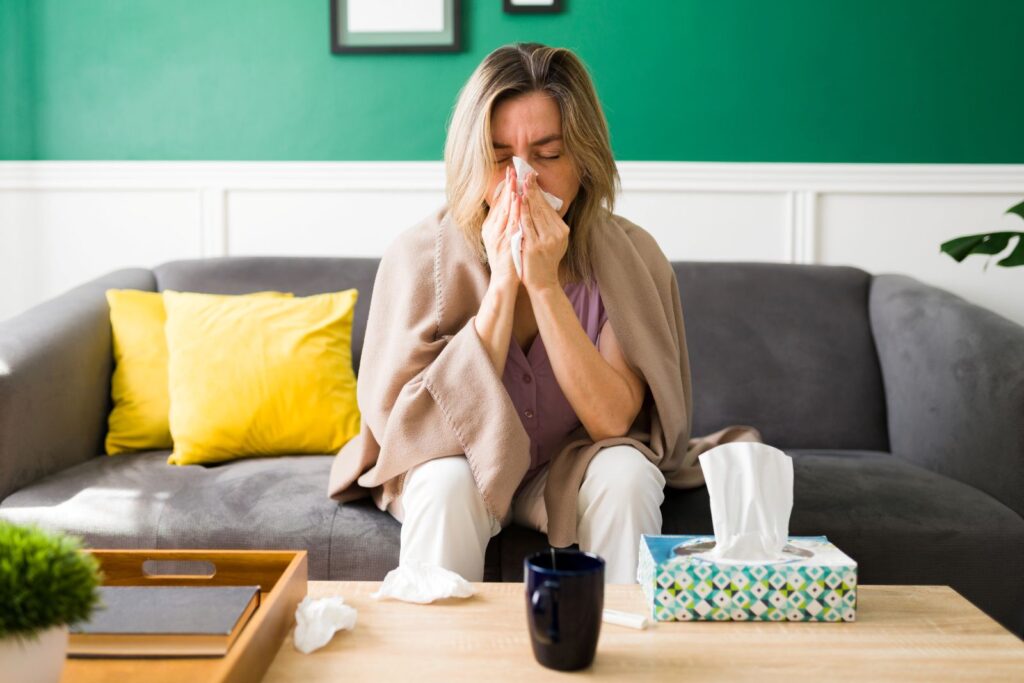
Signs That Air Quality May Be Triggering Your Allergies
If your allergy symptoms worsen during certain times of the year or when you’re in specific environments, air quality may be a key factor. Common signs include sneezing, itchy or watery eyes, nasal congestion, coughing, shortness of breath, and wheezing. You may notice that your symptoms get worse:
- On windy days (which stir up pollen and dust)
- Near busy roads or industrial areas
- Inside damp or mouldy homes
- In winter, especially around open fires or wood burners
If you find your symptoms lessen when you’re in clean, well-ventilated environments, or when you travel to areas with fewer airborne irritants, that’s a strong sign that airborne particles and pollution are playing a role in your allergies.
Managing Seasonal Allergies and Improving Air Quality
Reducing exposure to allergens and improving your environment can go a long way in relieving allergy symptoms. While you can’t control the weather or completely eliminate pollen, there are practical steps you can take to minimise your exposure.
Start by taking practical steps to minimise your exposure to allergens. Check daily pollen forecasts and air quality indexes, which are available through LAWA (Land, Air, Water Aotearoa) and various weather apps.
On days with high pollen counts or poor air quality, it’s a good idea to stay indoors during the peak pollen times (usually early morning and late afternoon), keep windows closed, and use air purifiers if possible. These proactive measures can significantly reduce your allergy symptoms and improve your quality of life.
Inside the home, regularly vacuum with a HEPA filter, wash your bedding in hot water so it kills the dust mites, and avoid drying clothes outside during high pollen periods. If your home suffers from dampness or mould, consider installing a dehumidifier or improving ventilation.
Heat pumps, HRV systems, or DVS ventilation units can dramatically improve indoor air quality by reducing humidity and increasing airflow.
For those using wood burners, make sure the appliance is clean-burning and compliant with regional air quality regulations. Wet or treated wood, poorly maintained burners, and outdated models can contribute significantly to indoor and outdoor air pollution.
Indoor air quality is also shaped by the cleaning products you use, and switching to safer alternatives can lower chemical triggers. Our guide on achieving a great clean without harsh household cleaners explains how.

Medical Options and Lifestyle Support
In addition to environmental management, many people find relief through antihistamines, nasal corticosteroid sprays, or prescription allergy treatments. These are available over the counter or through your GP.
If you suffer from allergies year-round or experience severe symptoms, your doctor may recommend allergy testing or immunotherapy, a long-term treatment that gradually desensitises your immune system to specific allergens.
Some natural options, such as saline nasal rinses, local honey, and herbal remedies, may also provide mild relief, but it’s important to consult a healthcare professional before relying on alternative treatments.
Final Thoughts: Cleaner Air for Healthier Living
Seasonal allergies and air quality go hand in hand, and even in a country as scenic and green as New Zealand, many of us are affected more than we realise. By understanding what’s in the air and how it changes across the seasons, you can take practical steps to protect your respiratory health and improve your day-to-day comfort.
While we can’t completely escape allergens, we can reduce their impact, whether that means filtering the air in your home, choosing the right time for outdoor activities, or seeking medical support. With awareness and action, breathing easier in Aotearoa is well within reach.
Read our article on Allergies Worldwide – Why Are More People Affected Today?